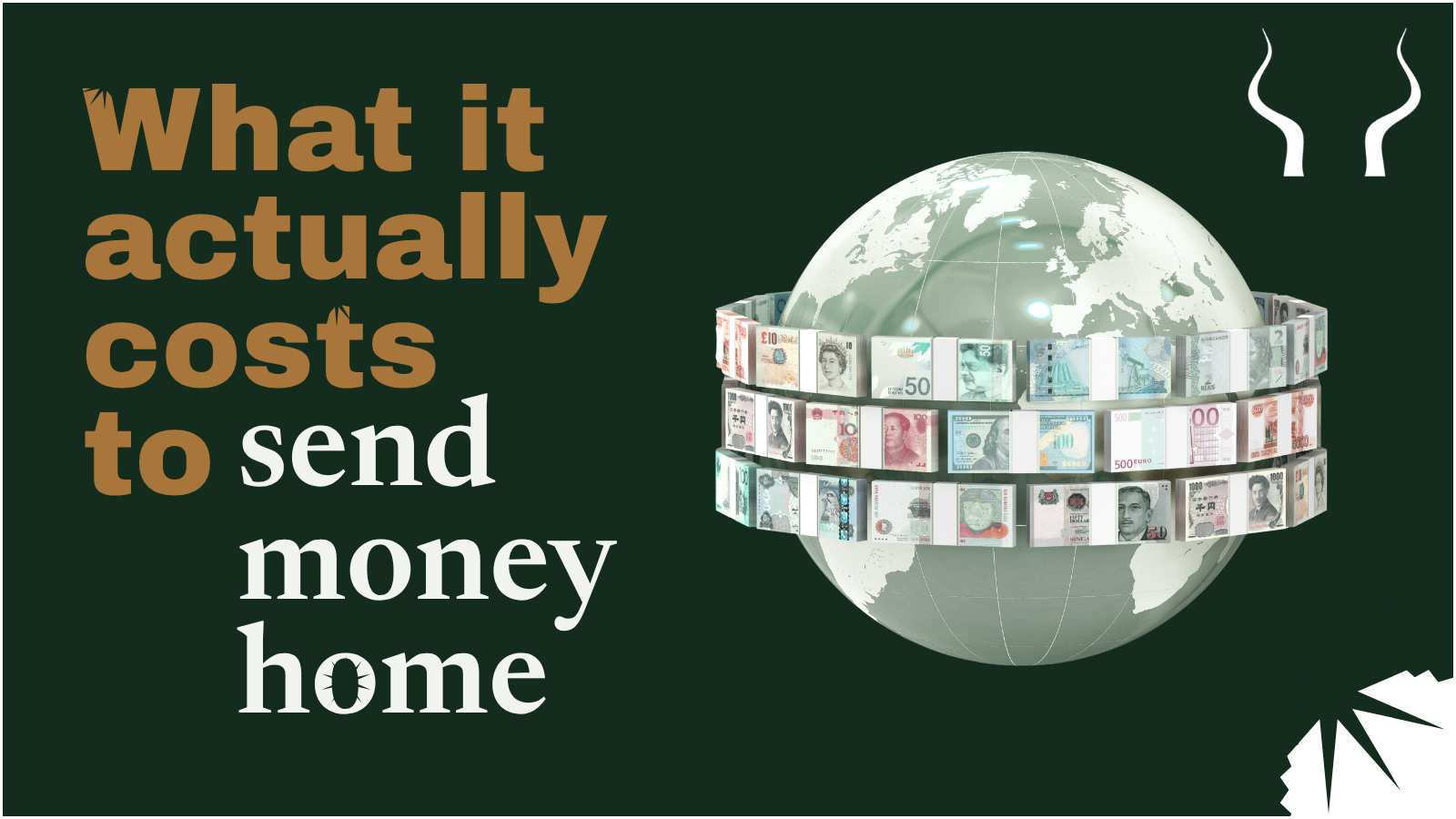
What it actually costs to send money home
Sending $200 from Dubai to Karachi is among the cheapest transfers in the world. It was never free and in July, the arrangement that made it look free, changed!
 Ameer Ali Salman
6 min read
Ameer Ali Salman
6 min read
A Pakistani electrician in Dubai earning AED 3,000 a month sends most of it home. He does this every month, usually on the day after payday, usually through the same exchange channel he has used for the past several years. He has never been charged any fee.
He is also not sending home as much as he thinks.
The gap between those two facts is where the entire economics of Pakistan's largest source of foreign currency sits. According to The State Bank of Pakistan, the country received record $41.6 billion in foreign workers' remittances in the 2025–26 fiscal year, up 8.6 per cent on the year before. The UAE alone accounted for $8.8 billion of it, second only to Saudi Arabia's $9.8 billion. Almost none sending that money pay a transfer fee.
And on 1 July this year, without much public notice, the arrangement that kept those transfers free changed hands.
For years, sending money to Pakistan through a formal channel cost the sender nothing.
Under the Telegraphic Transfer Charges Incentive Scheme, the State Bank of Pakistan reimbursed banks and exchange companies for the transfer charges on eligible remittances, so the transaction could be processed without either the sender or the recipient paying anything. The scheme existed to pull money out of informal channels and into the banking system, where it counts towards the country's foreign exchange reserves.
It worked, and it became expensive. The State Bank of Pakistan reported the cost of attracting remittances at $274,071 USD in the fiscal year ended June 2026, with the governor estimating it would rise to $306 to $324 Million in the following year as inflows grew towards a projected $44 billion.
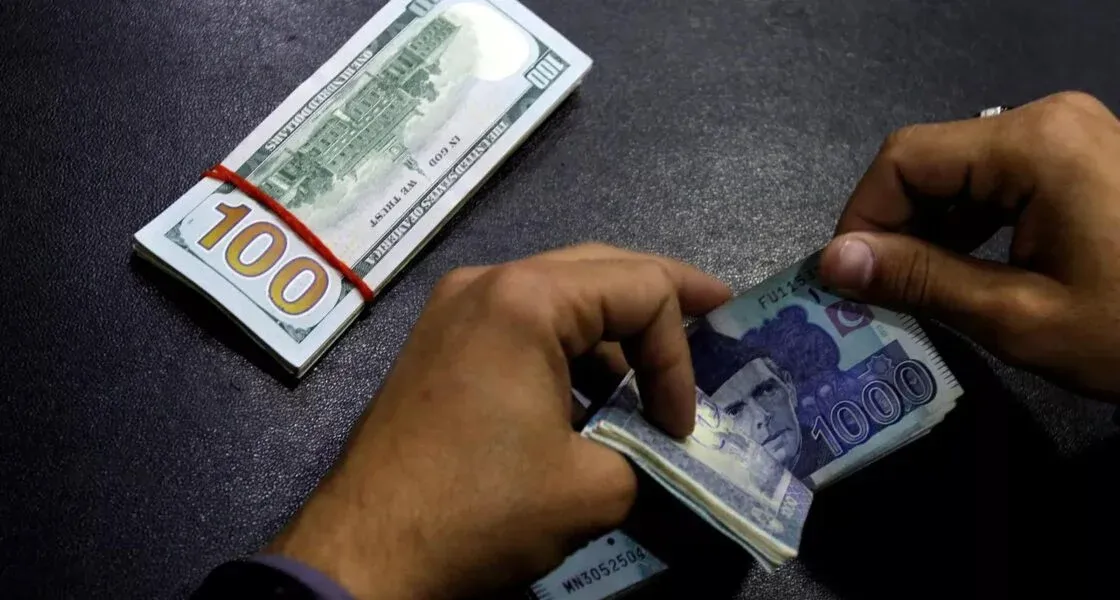
On 2nd July 2026, the central bank issued a circular discontinuing the scheme with effect from 1 July. The wording is worth reading closely, because it does two things at once. The scheme is over but banks were instructed to carry on implementing it themselves, and to ensure that qualifying transactions remain free of cost for senders and beneficiaries.
In other words: the fee did not come back. It moved. It is now a cost that banks absorb.
Banking sector sources told Pakistani newspapers the decision followed IMF scrutiny of the scheme's rising cost and its weakening link to bank performance, particularly as digital transfer technology has become cheaper. A second scheme, the Sohni Dharti Remittance Programme of Pakistan, which awarded points to overseas Pakistanis for using formal channels, ended on the same date; points earned before 30 June 2026 can be redeemed until June 2027.
The banks were not enthusiastic. At a press conference days later, Pakistan's Bank Alfalah chief executive Atif Bajwa said the change places "an additional [financial] burden" on banks and would dent profitability, while adding that remittances would continue to grow.
The Pakistan Remittance Initiative, a separate and larger programme through which banks earn incentives based on remittance volume, was left in place.
So what does it actually cost?
Here the numbers get counter-intuitive. By global standards, this corridor is very cheap.
The World Bank tracks the cost of sending $200 across 367 country corridors, measuring two components: the fee the sender pays, and the exchange rate margin, the difference between the market rate and the rate the provider actually gives you. Globally, sending $200 costs an average of 6.36 per cent. The United Nations target is to get every corridor under 3 per cent by 2030.

The UAE to Pakistan corridor sits at a total average cost of 1.93 per cent, in the World Bank's most recent published data for the route. That is roughly a third of the global average, and comfortably inside the UN target. For someone sending $200, it is a total cost of about $3.86.
That figure is the direct result of the subsidy described above. Strip out the fee — because the state was paying it — and what is left is the exchange rate margin, which for the corridor as a whole averaged just 0.33 per cent.
But averages hide the interesting part. The World Bank's own corridor data shows how differently the same transfer prices across providers:
| Provider | Type | Fee | Exchange rate margin | Total cost |
|---|---|---|---|---|
| Wall Street Exchange | Exchange house | AED 41.87 | 0.00% | 5.70% |
| Western Union | Money transfer operator | AED 24.26 | 2.46% | 5.76% |
| Dubai Islamic Bank | Bank | AED 63.00 | 2.82% | 11.39% |
Look at what those three rows do. Wall Street Exchange charged the second-highest fee of the three and gave the sender the market exchange rate exactly — a margin of zero. Dubai Islamic Bank charged the highest fee and took the widest margin. Western Union charged the lowest fee of the three, and took back more than twice that in the exchange rate.
The fee and the margin move independently. A provider advertising "zero fees" may be the most expensive option on the list, and a provider quoting a fee may be the cheapest. Neither number means anything on its own.
The 'Apps' changed shape of the question
The World Bank's provider-level data captures banks and exchange houses well. It captures the app-based services that have taken a growing share of this corridor less well, and those services price differently.
Taptap Send, which has become widely used among Pakistanis in the UAE, states plainly that it charges no transfer fee from the UAE and takes its margin in the exchange rate instead. Independent reviews put its typical markup at around 0.7 per cent across the corridors they examined. That is a genuinely low number — but it is a number, and it is the entire cost. There is nothing else to compare.
This is the honest version of the "no fees" claim that appears across the sector: it is usually true, and it is usually not the whole price. A 0.7 per cent margin on $200 is $1.40. A 2.8 per cent margin is $5.60. Both can be advertised as free.
If it were priced like everywhere else
The most useful way to see what Pakistan's arrangement is worth is to price the same transfer without it.
At the global average of 6.36 per cent, sending $200 from Dubai to Karachi would cost $12.72 — against roughly $3.86 today. On a monthly transfer, that is a difference of about $106 a year, on an income where $106 is not trivial.
At the South Asian regional average of 5.18 per cent, it would cost $10.36.
Applied to the full $8.8 billion that came from the UAE last year, the difference between the corridor's 1.93 per cent and the global 6.36 per cent is roughly $390 million. Money that stayed with households rather than going to intermediaries. Applied to the whole $41.6 billion, on the same crude basis, it is over $1.8 billion.
That is the scale of what the subsidy was buying, and roughly the scale of what banks have now been asked to absorb.
Two caveats on that arithmetic. It assumes every transfer would price at the average, which they would not. And it treats the cost saving as if it were free, which it never was. Pakistani taxpayers funded it through the State Bank, and now bank shareholders fund it instead. The money did not appear from nowhere. It moved.
Who pays next
The unresolved question is what happens if banks decide the arrangement no longer suits them.
The instruction from the central bank is clear: qualifying transactions stay free for senders and recipients. Banks have said publicly that they will comply and that they expect remittances to keep growing. Pakistan's banking sector earned around Rs640 billion in calendar year 2025, so the absorbed cost, while large, is not existential.
But the pressure point is visible. If the free-transfer arrangement erodes through tighter eligibility rules, through slower service on free channels, or through wider exchange rate margins that recover the cost without ever appearing as a fee it will not be announced. It will show up quietly in the rate a worker is offered on a Tuesday afternoon.
That is why the margin, not the fee, is the number worth watching. It is the part of the price that can change without anyone being told.
For the electrician in Dubai, the practical advice is unglamorous and unchanged: before sending, check the rate you are being offered against the mid-market rate on any currency site, and work out the difference yourself. It takes about thirty seconds. On a corridor this competitive, the spread between the best and worst option on a given day is real money, and nobody is going to point it out for you.
Sources
- State Bank of Pakistan, EPD Circular Letter No. 12 of 2026, 2 July 2026 — discontinuation of TTCIS. https://www.sbp.org.pk/circulars/epd-circular-letter-no-12-of-2026
- World Bank, Remittance Prices Worldwide — UAE to Pakistan corridor. https://remittanceprices.worldbank.org/corridor/AE/PK
- World Bank, Remittance Prices Worldwide — global averages. https://remittanceprices.worldbank.org/
- State Bank of Pakistan, workers' remittances data, FY2025–26.
- Dawn, "Remittance incentives to banks abolished as IMF steps in", 3 July 2026.
- Business Recorder, "Banks say shift in cost of remittances to burden them", 4 July 2026.
- Business Recorder, "FY26: Record USD41.6bn home remittances received", 10 July 2026.
- Taptap Send, UAE sending terms. https://support.taptapsend.com/hc/en-gb/articles/10488212372627
- Pakistan Remittance Initiative programme terms.
One email a week. No noise.
A single story unwound carefully, plus the few things worth your time. Free, and it stays that way.