
The Rooftop solar boom is breaking the grid's finances
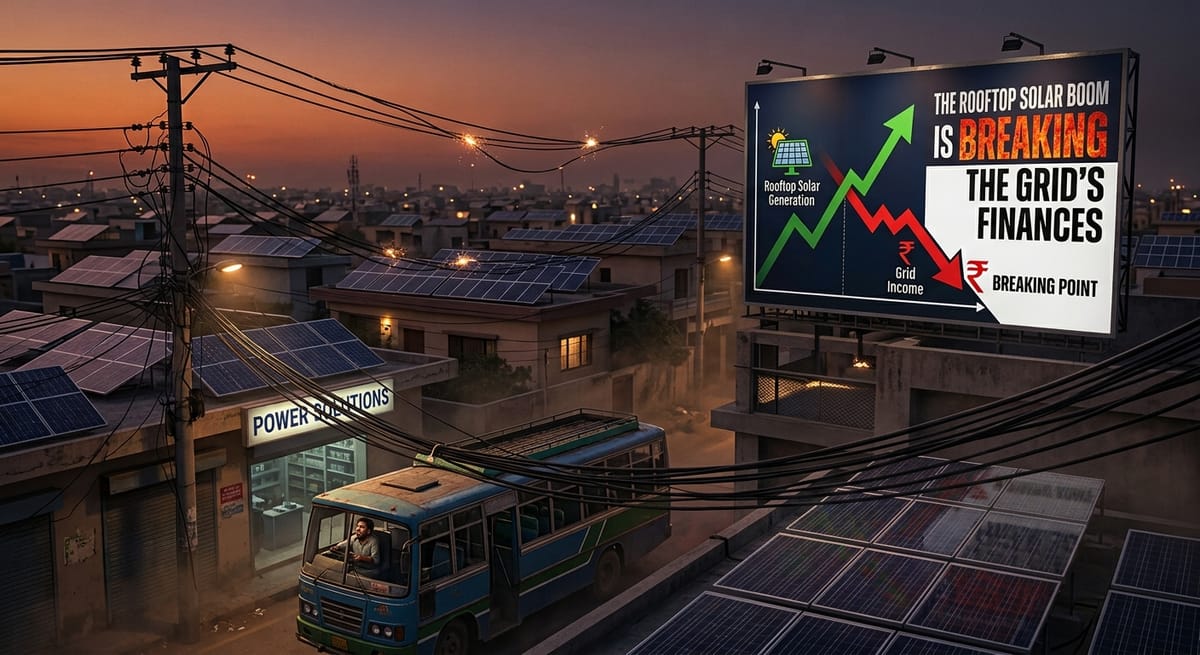
Every rooftop solar panel installed in Pakistan today quietly raises the electricity bill of a neighbor who couldn't afford one. As million of Pakistani households and business feels an unreliable, overpriced grid for rooftop solar, the fixed cost of running the grid don't shrink with them they simply get pushed onto everyone left behind, mostly people who can't afford to leave one.
Across suburban neighborhoods in Lahore, industrial zones in Faisalabad and agricultural lands in Punjab, solar panels cover roofs and fields. Pakistan witnessed an unprecedented rooftop solar surge.
Yet, this rapid, energy migration has triggered an unintended side effect: a structural energy death spiral that threatens the stability of the national power grid and shifts financial burdens onto vulnerable peoples.
In 2024, Pakistan imported 17 Gigawatts (GW) of solar panels, making it the world’s third-largest solar importer that year according to Ember’s Global Electricity Review 2025. Alternative assessments, such as data published by CleanTechnica, estimate total panel inflows closer to 22 GW when accounting for broader supply chain channels.
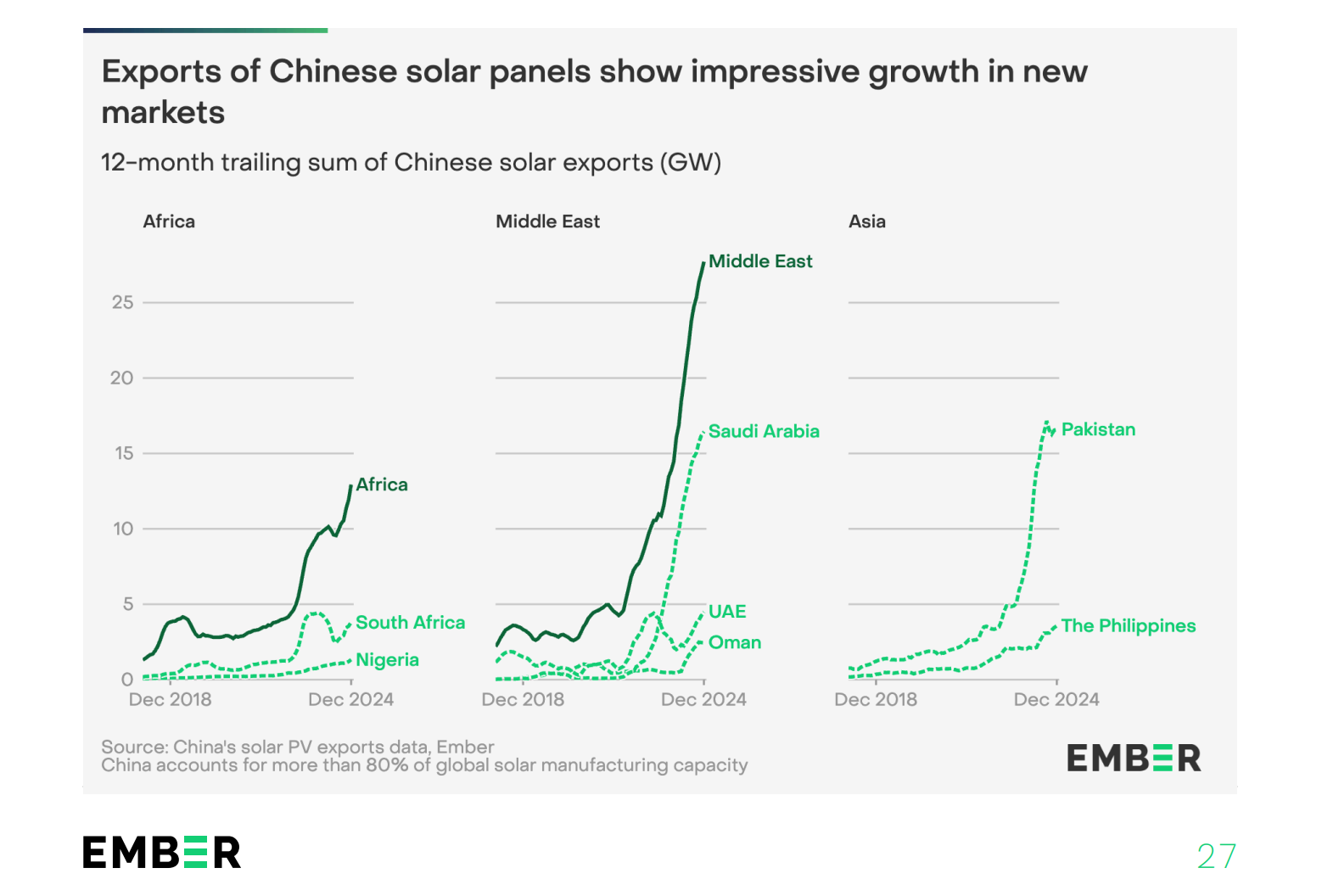
Momentum remained strong through FY2025. Trade figures compiled by Renewables First from Pakistan Bureau of Statistics (PBS) data show that Pakistan imported an additional 12.7 GW of solar modules in the first three quarters of the fiscal year alone.
The 17–22 GW imported in a single year represents nearly half of Pakistan’s total grid-connected peak load capacity.
This expansion occurred without state subsidies, utility-scale mega-projects, or central planning. It was driven primarily by households, commercial entities, and industrial units seeking financial relief.
In FY2024, rooftop generation caused an estimated 3.2 billion unit (kWh) decline in grid electricity sales. This drop in volume stripped DISCOs of approximately Rs 101 billion in revenue.
Because Pakistan’s power purchasing agreements rely heavily on fixed capacity payments—guaranteed fees paid to Independent Power Producers (IPPs) regardless of actual generation falling grid demand does not lower fixed costs. Instead, fixed costs are distributed across a shrinking volume of grid sales, driving up per-unit retail prices for remaining consumers.
Net Metering to Net Billing
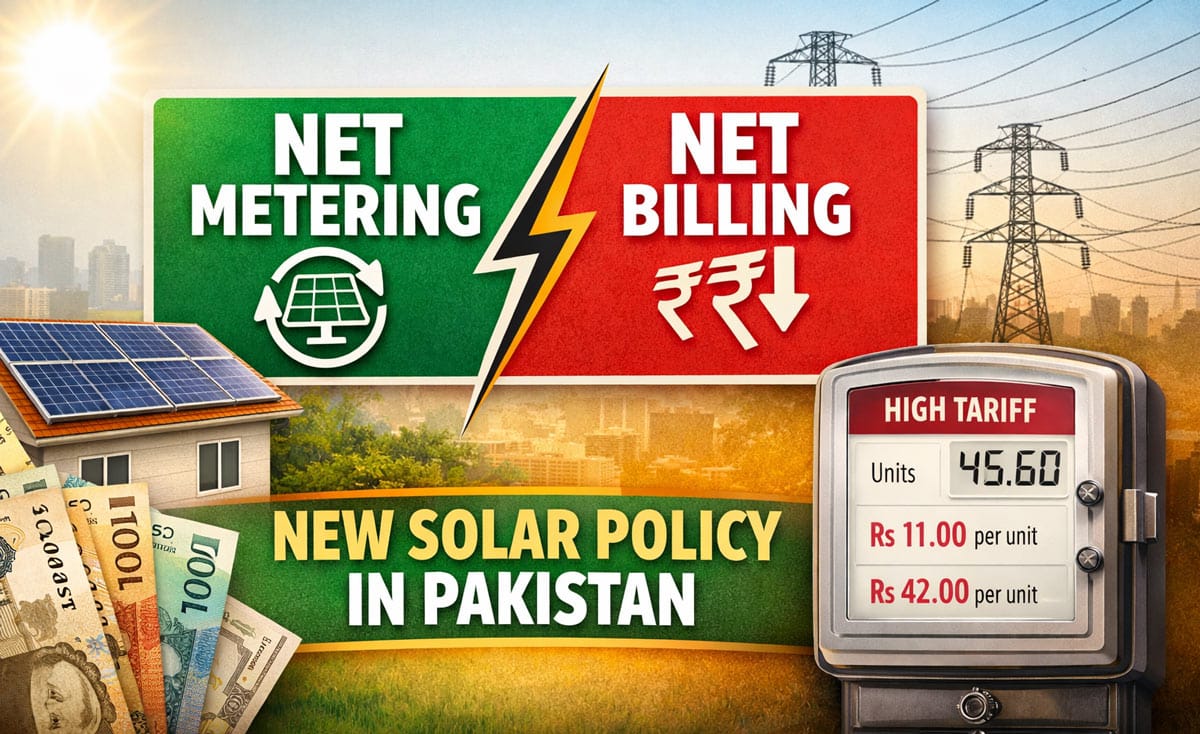
To slow revenue losses, the National Electric Power Regulatory Authority (NEPRA) shifted the framework from traditional net metering to net billing.
NEPRA slashed the buyback rate for excess solar electricity exported to the grid from Rs 25.9–27.0 per unit down to Rs 8.13–11.0 per unit (with a reference buyback floor set at roughly Rs 9.80/unit).
Under classic net metering, exported surplus units offset imported grid units on a near 1-to-1 financial basis. Under net billing, exports are compensated at a lower wholesale National Average Energy Purchase Price, while imports remain billed at full retail rates.
Policy analyses, including coverage in Dawn’s Prism, note that over 90% of grid-connected electricity consumers were carrying higher tariff burdens to cover grid fixed costs. Regulators framed the buyback reduction as a necessary step for fiscal cost-recovery.
Impact on Payback Dynamics
For newly installed residential systems relying on exporting surplus energy, estimated payback periods have stretched from 3–5 years up to 10–12 years under pure export scenarios. However, because solar panel prices have fallen significantly, systems sized strictly for daytime self-consumption continue to hit financial payback within 3.5 to 5 years.
A Regressive Trap
This transition highlights an economic divide. Installing a standard 7–10 kW residential solar setup requires an upfront capital investment of Rs 1.0 to 1.7 million, placing it out of reach for lower-income households.
Research from the Pakistan Institute of Development Economics (PIDE) points out the resulting equity issue:
Wealthier Households Exit: High-income consumers and Commercial & Industrial (C&I) entities reduce their reliance on the grid using private capital.
Fixed Costs Shift: The remaining fixed capacity debt is spread across non-solar users through uniform surcharges and cross-subsidies.
Regressive Outcomes: Low-income families who cannot afford upfront solar costs absorb a disproportionate share of grid maintenance and capacity charges.
Systemic Debates: Solar Vs. Grid Mismanagement
As policy debates continue, industry experts differ on where primary responsibility lies:
Perspective Argument Proposed Solution
Regulators & DISCOs Unchecked rooftop expansion reduces grid demand, shifts capacity costs to non-solar consumers, and threatens grid stability. Reduce buyback rates, move to net billing, enforce strict load limits, and require grid-support equipment.
Industry Analysts & Think Tanks High tariffs stem primarily from structural DISCO inefficiencies, high Transmission & Distribution (T&D) losses (16–17% average, rising above 50% in select regions), and legacy IPP contracts—not rooftop solar. Modernize grid infrastructure, reform IPP contracts, deploy localized battery storage, and lower electricity taxes.
The Self Consumption Era
Pakistan’s solar surge illustrates a market-driven response to rising power costs. While regulatory adjustments have reduced the profitability of exporting power to the grid, they have not stopped solar adoption altogether.
Instead, the market is shifting toward self-consumption and battery storage. Homeowners and businesses are sizing systems to match their immediate daytime load rather than maximizing exports. As battery storage costs drop, more prosumers are moving further off-grid.