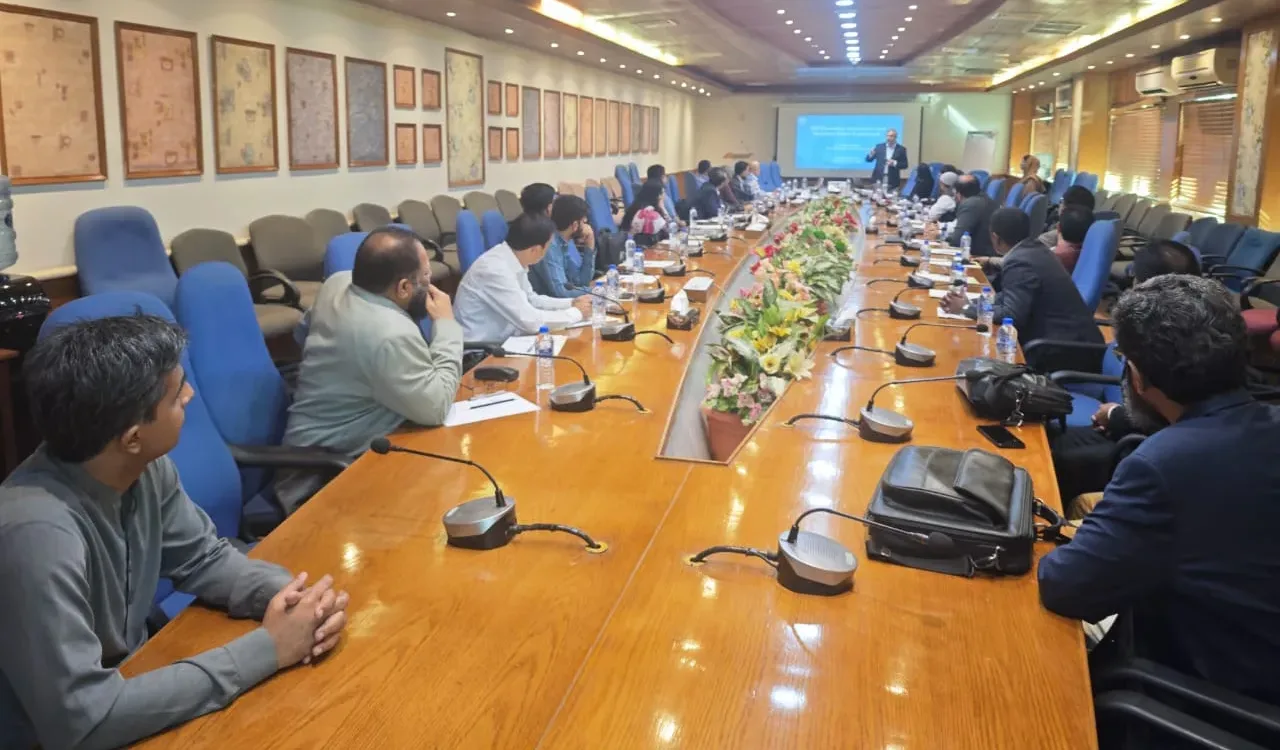
Many people are still confused about how monetary policy operates, leaving open concerns about its structure and the people in charge of determining it. I also struggled with similar questions before I visited the Central Bank of Pakistan. How is the policy rate decided? Who makes monetary policy decisions? What elements affect how interest rates are set? What is the main objective of monetary policy? Let’s break it down.
In Pakistan, monetary policy is designed and executed by the State Bank of Pakistan (SBP)—the country’s central bank. But it’s not a decision made in isolation. A Monetary Policy Committee (MPC), comprising experts from the central bank and independent members, plays a crucial role in setting the direction.
The people are aware that the objectives of monetary policy include financial stability, promoting private investment, protecting foreign exchange reserves, and controlling inflation. But after two days of training, now it is clear to me that the primary objective is to maintain price stability.
How Is the Monetary Policy Designed?
The process of formulating monetary policy is dynamic and technical, requiring careful analysis of policy considerations and economic forecasting. Before making important decisions, the SBP monitors domestic liquidity conditions, global financial developments, economic activity, and inflation trends.
The policy rate or interest rate at which commercial banks borrow from the central bank is one of the most important monetary policy decisions. This rate affects borrowing, investment, and consumption trends throughout the economy.
Essential elements affecting the policy rate.
When calculating the policy rate, several important factors are taken into consideration.
Trends in Inflation: To reduce excessive spending, the central bank may decide to raise the policy rate if inflation is high. A rate cut, on the other hand, can boost economic activity if inflation is low.
Economic Growth: The SBP needs to find a balance between maintaining economic growth and reining in inflation. While lower rates may promote borrowing and investment, higher rates may impede growth.
Exchange Rate Stability: Another important consideration is the strength of the Pakistani rupee relative to other currencies. Inflationary pressures brought on by a weak rupee may necessitate stricter monetary policy. Global economic conditions are events that take place in the worldwide market, such as changes in the price of oil or interest rate adjustments made by major economies like the United States, which can affect domestic monetary policy as well.
Fiscal Policy and Government Borrowing: Government borrowing from the central bank has the potential to impact inflation and the money supply, which in turn can influence monetary policy decisions.
Lastly, some thoughts. Monetary policy might appear to be a complicated and remote topic to those who are not familiar with it. But everyone is affected, whether it’s through loan interest rates, how inflation affects purchasing power, or how stable the economy is overall.
It is essential to comprehend these processes, and many misunderstandings can be cleared up by visiting establishments such as the State Bank of Pakistan. More than ever, an efficient and well-balanced monetary policy is essential as Pakistan negotiates its economic difficulties.