Supreme Court Contemplates NAB Amendments
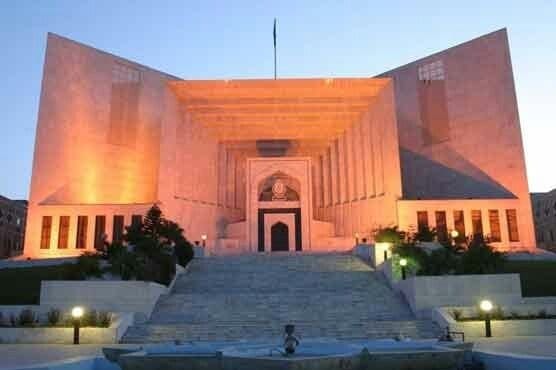
In a development that could shape the trajectory of Pakistan's legal landscape, Supreme Court Justice Mansoor Ali Shah has proposed the constitution of a full court to deliberate on the Pakistan Tekreek-e-Insaf's (PTI) petition against the National Accountability Bureau (NAB) amendments. The case, deemed "crucial" by Chief Justice Umar Ata Bandial, is gaining momentum as it revolves around significant alterations introduced to the National Accountability (Second Amendment) Act in 2022. The implications of this legal showdown are far-reaching, impacting the powers of the anti-graft watchdog and raising questions about the balance of authority in the realm of accountability.
The legal saga dates back to last year when PTI Chief Imran Khan filed an application challenging the National Accountability Ordinance (NAO) 2000, which had been amended by the Pakistan Muslim League-Nawaz (PML-N)-led coalition government. The case gained prominence as it emerged that the NAO amendments had inadvertently benefited a substantial majority of NAB's cases, including high-profile ones. These amendments had been enacted by the previous Pakistan Democratic Movement (PDM) government, which assumed power in April of the same year.
Critics argue that these amendments not only curtailed NAB's authority but also signaled a larger debate on the checks and balances within the country's political and judicial systems. The PTI, in particular, vehemently opposed the PDM's move, asserting that it sought to restrict the scope of the anti-graft watchdog's operations.
In a subsequent turn of events, the federal cabinet passed the National Accountability (Third Amendment) Bill for 2022, marking yet another milestone in the evolving legal landscape. This amendment further limited NAB's role, particularly in corruption cases involving amounts exceeding Rs500 million, and eliminated the president's power to appoint judges for accountability courts.
The legal proceedings, marked by complexity and significance, have undergone numerous hearings, with a three-member bench led by Chief Justice Bandial at the helm. The latest hearing, the 48th in this ongoing legal saga, witnessed Justice Mansoor Ali Shah's call for the formation of a full court to adjudicate on the matter. This suggestion stems from his belief that the apex court should resolve the SC (Practice and Procedure) Act before addressing the NAB amendments case.
Justice Mansoor's proactive stance draws from a prior instance where he proposed a similar approach in a military trial case. He reiterated his belief that the NAB amendments case warrants the attention of a full court. He lamented the delay in resolving petitions challenging the law, emphasizing the transformative impact a decisive ruling could have had if the Practice and Procedure Act case had already been concluded.
Chief Justice Bandial, while recognizing the importance of the matter, suggested that final arguments from the involved parties should be presented in the next hearing. He highlighted the longevity of the case, which has lingered since 2022, and noted that deciding on the merits of the case may not be immediately necessary. Despite this, he underscored the critical nature of the issue, especially given his impending retirement. He expressed a sense of responsibility to deliver a judgment on the matter, acknowledging its significance and his commitment to fulfilling his judicial duties.
As the legal arena prepares for what could be a landmark decision, all eyes are on the Supreme Court. The outcome of the NAB amendments case is poised to resonate throughout Pakistan's legal, political, and social spheres. With implications ranging from the powers of an anti-graft institution to the broader discourse on accountability, this case underscores the vital role of the judiciary in upholding the principles of justice and safeguarding the democratic fabric of the nation.
One email a week. No noise.
A single story unwound carefully, plus the few things worth your time. Free, and it stays that way.