

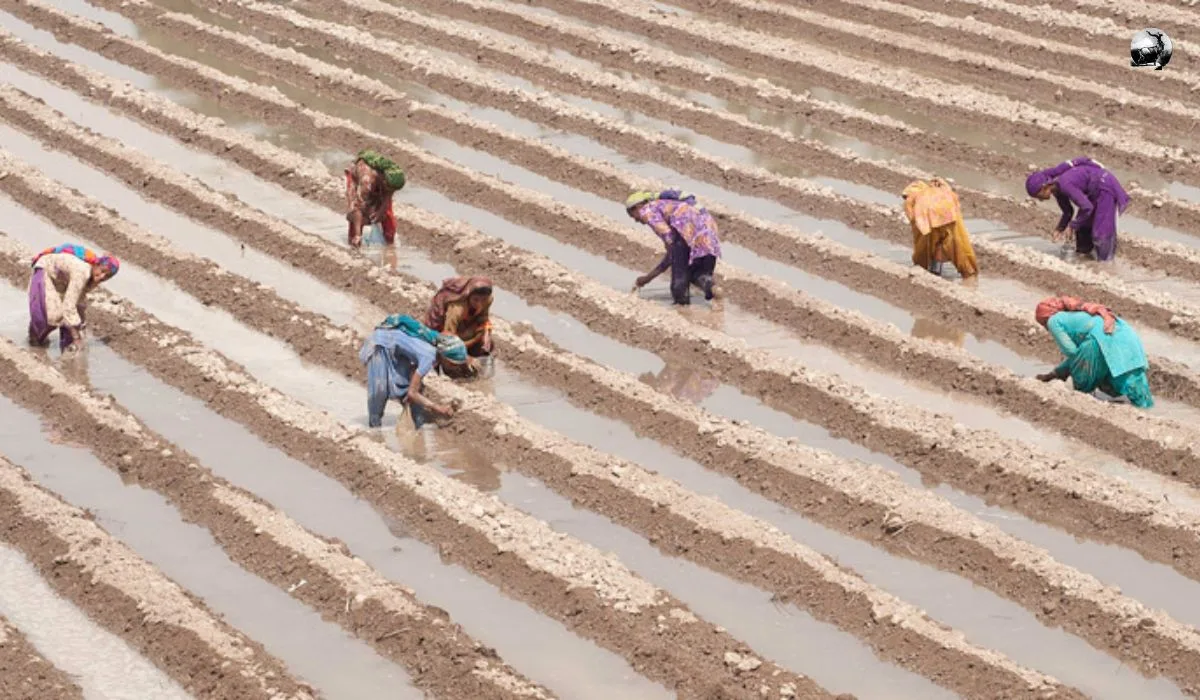
The Economic Policy and Business Development (EPBD) Think Tank has released a comprehensive analysis endorsing early cotton sowing as a transformative strategy that could revitalize Pakistan’s textile sector and significantly boost the country’s economic prospects.
After extensive research into Pakistan’s agricultural policy landscape, EPBD analysts have identified early cotton sowing as perhaps the single most impactful intervention available to policymakers seeking to address the nation’s ongoing cotton crisis.
EPBD analysis shows that simply adjusting sowing dates to mid-March through mid-April could increase cotton yields by 14-35%, generating substantial economic returns at virtually no additional cost. This represents one of the most cost-effective agricultural interventions available to Pakistan today.
EPBD specifically commends the Punjab government’s recent initiative offering Rs 25,000 over five acres to farmers who cultivate cotton between February 15 and March 31, calling it “a precisely targeted policy intervention backed by sound economic reasoning.”
The Punjab government’s incentive program demonstrates the kind of evidence-based policymaking that Pakistan desperately needs,” noted by EPBD. The analysis suggests this investment will yield returns many times its value through increased production, reduced imports, and strengthened rural economies.
According to EPBD’s calculations, nationwide implementation of similar early sowing incentives could generate up to Rs 25 billion in rural economic activity while producing an additional 1.41 million cotton bales worth approximately $350 million at current market prices.
The EPBD report highlights how early sowing creates cascading economic benefits throughout Pakistan’s textile value chain. At the farm level, net income and benefit-cost ratios decrease linearly with delays in sowing. Maximum net income of Rs 155,725 per hectare was achieved with mid-April sowing in controlled studies.
In terms of rural employment, cotton generates Rs 40,175 per hectare in labor income, significantly more than competing crops, providing critical employment in rural areas. For the textile industry, early-sown cotton produces superior fiber characteristics, enhancing the quality of Pakistan’s textile exports and strengthening the country’s competitive position in global markets.
On a national scale, reducing cotton imports, currently at $1.61 billion annually, would significantly improve Pakistan’s balance of trade and foreign exchange reserves, according to the analysis.
Despite recent challenges, EPBD’s analysis confirms that Pakistan maintains a strong comparative advantage in cotton production, with a Domestic Resource Cost (DRC) of 0.47, indicating the country utilizes approximately Rs 0.47 of domestic resources to produce cotton output worth PKR 1 in international markets.
Pakistan’s comparative advantage in cotton production remains remarkably strong, emphasized EPBD. The current crisis stems from policy distortions and climate challenges, not from any fundamental loss of economic efficiency in the sector.
Based on its analysis, EPBD recommends a comprehensive policy package to maximize the benefits of early cotton sowing. The think tank suggests extending Punjab’s Rs 25,000 per acre early sowing incentive program nationwide as a first step. Additionally, they recommend implementing a Minimum Support Price of Rs 10,000 per 40 kg to provide market stability and ensure profitability for farmers.
The analysis also calls for eliminating the 18% sales tax on domestic cotton to level the playing field between local production and imports. EPBD further recommends adjusting existing agricultural policies that currently favor competing crops, particularly sugarcane, at cotton’s expense.
Investment in research for climate-resilient cotton varieties specifically bred for early sowing rounds out the key recommendations from the think tank. These varieties would be tailored to the specific growing conditions of Pakistan’s diverse agricultural regions.
The EPBD report additionally recommends expanding cotton cultivation into Balochistan, Sindh, and the Potohar region. These areas offer favorable growing conditions and could significantly increase our national production capacity.
Pakistan needs a coordinated, evidence-based strategy to revitalize its cotton sector. Early sowing represents the cornerstone of such a strategy, offering immediate benefits while complementing longer-term structural reforms.
EPBD’s analysis comes at a critical time for Pakistan’s agricultural sector, as the country seeks to reduce import dependency and strengthen rural economies in the face of mounting climate challenges. The initiative would also provide crucial support to Pakistan’s textile industry, which remains the backbone of the country’s export economy, contributing over $16 billion annually to foreign exchange earnings. The findings will be presented to key stakeholders, including officials from the Ministry of National Food Security & Research and provincial agriculture departments.
The Economic Policy and Business Development (EPBD) Think Tank specializes in evidence-based economic and business policy analysis in Pakistan. For more information or to access the full report, visit www.epbdt.com
Pharmazee Good post! We will be linking to this partspacelarly great post on our site. Keep up the great writing