

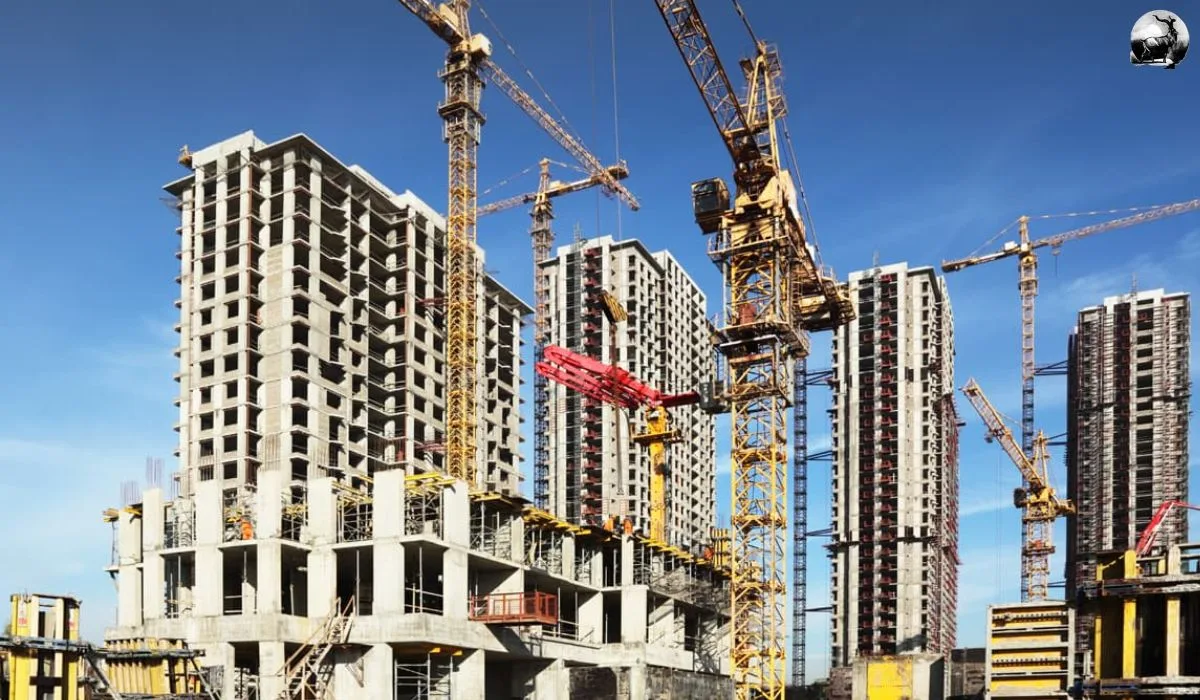
The rising costs of construction materials, coupled with high taxation, have slowed construction activity in the country, pushing investors toward foreign markets, besides shrinking large-scale employment opportunities. This was stated by S. M. Nabeel, Chairman North, Association of Builders and Developers (ABAD).
To address these challenges, the government should optimize the supply chain for construction materials and tackle issues related to high input costs and market inefficiencies. Encouraging new market entrants and fostering competition through policy adjustments will contribute to cost stabilization, making construction more affordable for developers and consumers alike, he added.
The construction and housing sector is a fundamental pillar of Pakistan’s economy, contributing approximately 3% to the Gross Domestic Product (GDP) and accounting for 13% of industrial output. It is also the second-largest employer in the country, providing jobs to millions of workers across various skill levels. It plays a vital role in economic growth and employment generation.
However, Pakistan faces a severe housing shortage, with an estimated deficit of 12 million units—half of which are in urban areas. Compounding this challenge is the country’s mortgage-to-GDP ratio of just 0.3%, one of the lowest globally and significantly below the South Asian average of 3.4%.
Under the visionary leadership of the Prime Minister, the government is prioritizing the construction industry by implementing strategic reforms and incentive packages aimed at stimulating investment and ensuring sustainable development to boost economic growth.
A significant barrier to the growth of the construction sector has been the limited access to financing. Traditionally, bank credit for home loans has remained disproportionately low, making it difficult for individuals to secure financing for homeownership.
Addressing these concerns, ABAD has highlighted how, globally, people can afford homes through a structured mortgage system—paying a 20% down payment and securing a mortgage for 25 years. However, in Pakistan, such long-term financing options remain largely unavailable, making homeownership inaccessible for many.
To strengthen homeownership through long-term financing, the State Bank needs to introduce a policy of fixed interest rates for 10 to 15 years to counter Pakistan’s high interest rate fluctuations. ABAD has collaborated with the State Bank and the Finance Minister to streamline foreclosure laws, ensuring banks have legal safeguards in case of mortgage defaults, thereby making housing finance more secure and accessible.
Moreover, the streamlining of property registration and taxation policies will encourage greater investment in real estate and housing projects. Key proposals include reducing property transaction taxes from 11-14% to 4-4.5%, implementing a single-digit policy rate for housing finance, and promoting vertical development through revised building regulations. A strong emphasis is placed on affordable housing, with new monetary thresholds defining low- and middle-income housing between Rs. 50,000 to Rs. 200,000 monthly income brackets.
A major challenge for the construction sector has been the skyrocketing cost of materials. The price of steel has surged from Rs126 per kg in 2020 to Rs 246 in 2025, while the cost of brown 12 mm glass has risen from Rs183 per square foot in 2023 to Rs522 in 2025.
Similarly, green 8 mm glass now costs Rs 366 per square foot, up from Rs 357, and clear 5 mm glass has increased from Rs 142 to Rs150 per square foot in the same period. Cement prices have seen a staggering rise from Rs 553 per 50 kg in 2020 to Rs 1,350 in 2025, significantly impacting housing affordability, Nabeel added.
The rising costs of construction materials, coupled with fluctuating exchange rates and high taxation, have slowed construction activity in Pakistan. These factors have made local real estate development less viable, pushing investors toward foreign markets such as the Middle East and shrinking large-scale employment opportunities.
Despite these efforts, Pakistan still faces a housing deficit of 10-12 million units, with an annual demand for 400,000 new homes. The country’s growing youth population further underscores the need for affordable housing solutions. To bridge this gap, targeted incentives for first-time homebuyers—including down payment assistance, tax breaks, and subsidized interest rates—are essential.
Implementing these measures would enhance housing affordability while simultaneously driving demand. Every 100,000 new housing units could contribute 0.5% to GDP growth, unlocking a $200 billion market opportunity and accelerating economic expansion.
Nabeel further siad that the government’s support for the construction industry extends beyond housing. As one of Pakistan’s largest industries, construction plays a critical role in economic development, employment generation, and infrastructure growth. However, the industry is currently operating at only 30-40% of its capacity, limiting its potential to drive economic expansion.
Recent policy reforms and incentives are expected to revitalize the sector, attracting both local and foreign investment. By streamlining regulations, offering tax incentives, and reducing bureaucratic hurdles, the government is creating an environment conducive to business expansion and long-term sustainable growth.
A thriving construction industry stimulates demand across 72 allied industries, including cement, steel, glass, and electrical equipment, further amplifying economic activity. Increased investments in infrastructure and real estate will generate employment opportunities for both skilled and unskilled labor.
Additionally, a favorable business climate will encourage Foreign Direct Investment (FDI), reversing capital flight and fostering domestic economic resilience. As a result, Pakistan can anticipate enhanced GDP growth, improved urban planning, and better living standards for its citizens. By fostering a robust construction sector, the government is laying the foundation for long-term economic stability and national development.
To further strengthen the sector, the government should study the Middle East, particularly Dubai, to understand how real estate and construction transformed its economy into a global powerhouse, attracting billions in investment. Pakistan must showcase that it is not only ready for investment but is the future of investment, with the vision, resources, and determination to build a thriving nation.
Nabeel conclued that the collaborative efforts of the Prime Minister, Finance Minister, Housing Minister, and the