Made in Pakistan: Spotify Marks 5 Years of Music Discovery and Homegrown Growth
In Pakistan, listeners are exploring more music than ever before—moving across genres, generations, and languages in ways that are reshaping how music is discovered and experienced. Five years since its launch in the country, Spotify is marking a milestone defined not just by growth, but by a shift in how deeply audiences are engaging with music.
Read More: Asha Bhosle Passes Away at 92: End of a Golden Era in Bollywood Music
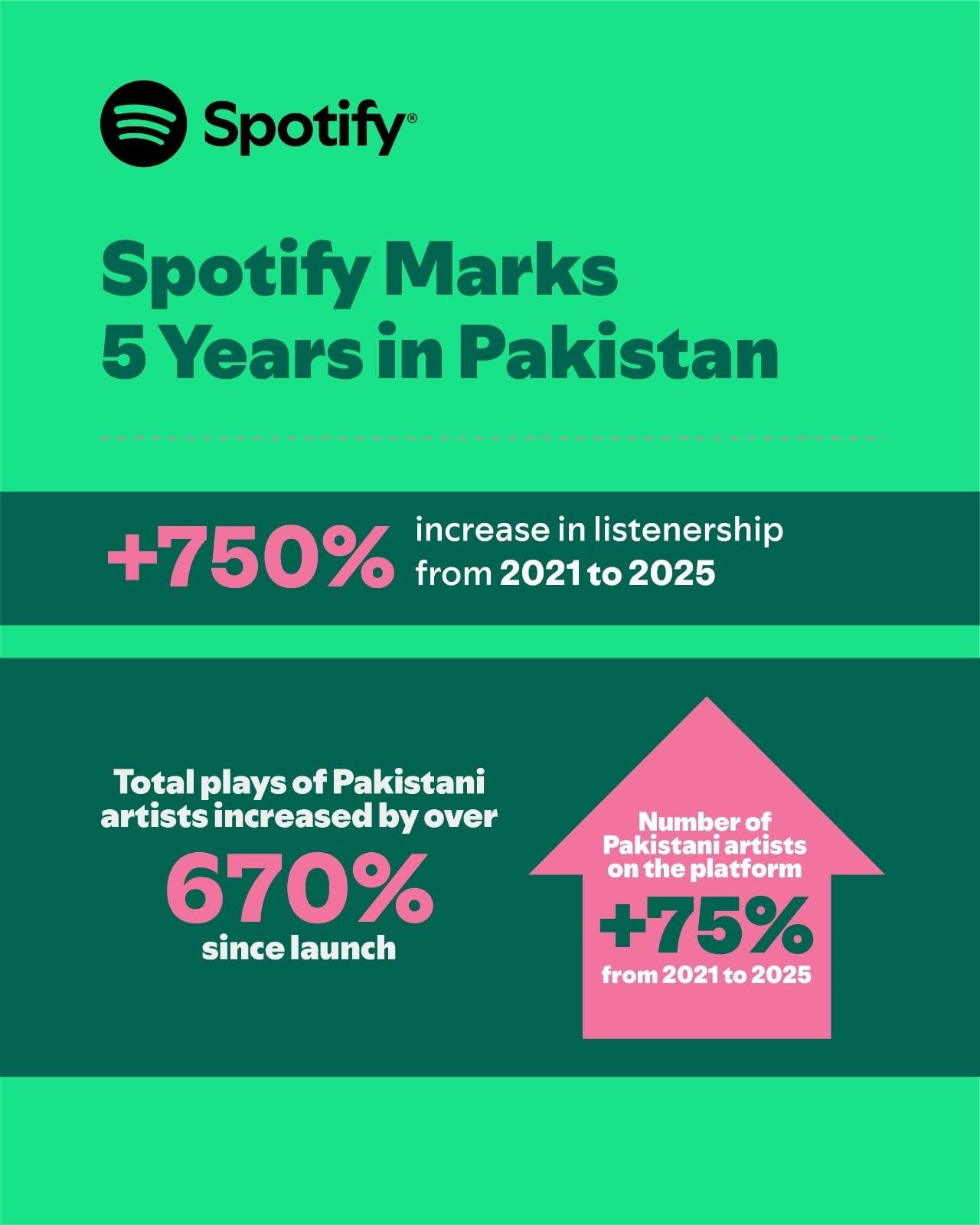
Since 2021, Spotify has become an integral part of how music is experienced in Pakistan. Over this period, listenership on the platform has grown by more than 750%, while listeners have created over 15 million user-generated playlists, highlighting how actively audiences are curating and shaping their own music journeys.
This shift is also reflected in listening behavior. Today, the average Spotify listener in Pakistan streams more than 140 different artists per year, pointing to a highly discovery-driven audience where exploring new music is the norm.
A Diverse and Evolving Sound
From Pakistani hip hop, Pakistani pop, and qawwali to regional sounds, listeners in Pakistan are embracing a wide range of genres, reflecting a music culture that blends tradition with contemporary influences and continues to evolve rapidly.
As listening becomes more diverse, more listeners are discovering and engaging with Pakistani artists, with local music continuing to grow on Spotify. Since 2021, total plays of Pakistani artists on the platform have grown more than sevenfold, pointing to a deeper connection between audiences and homegrown talent.
The artists defining this moment reflect that growth. From contemporary voices like Talha Anjum, Umair, and Hasan Raheem, to enduring icons such as Atif Aslam and Nusrat Fateh Ali Khan, listeners are moving seamlessly between new and legacy sounds—highlighting the breadth of Pakistan’s musical identity.
Similarly, tracks like “Jhol” by Maanu and Annural Khalid, “Pal Pal” by Afusic and AliSoomroMusic, “Wishes” by Hasan Raheem, Umair, and Talwiinder, “Bikhra” by Abdul Hannan and Rovalio, and “Maand” by Bayaan, Hasan Raheem, and Rovalio have emerged as defining songs of the streaming era.
Championing Homegrown Music
This momentum is being shaped through Spotify’s continued investment in Pakistani music. Playlists like “Pakka Hit Hai” have become a home for the country’s biggest contemporary hits, while “ICON Pakistan” celebrates the legacy of Pakistan’s most influential artists.
Pakistan’s music ecosystem is expanding rapidly. Since launch, the number of Pakistani artists on Spotify has grown by nearly 75%, as more creators enter the space and reach audiences both locally and globally.
Supporting Artists Across Pakistan
Supporting this evolution remains a key focus for Spotify. Through initiatives like “RADAR Pakistan”, “EQUAL Pakistan”, and “Fresh Finds Pakistan”, the platform continues to invest in artists at every stage, helping emerging voices break through while supporting established talent in reaching new audiences.
“Music has always been at the heart of culture in Pakistan, but what we’re seeing now is a new level of connection. Listeners are exploring more, discovering faster, and showing up for homegrown artists in a way that feels truly powerful,” said Rutaba Yaqub, Spotify’s Artist & Label Partnerships Manager for Pakistan & UAE. “From emerging voices to iconic legends, there’s a real momentum behind Pakistani music today, and it’s exciting to see how that continues to grow.”
Together, these shifts point to a music culture that is becoming increasingly open, dynamic, and discovery-led, where listeners are not only shaping what’s popular, but actively driving the rise of new artists and sounds across Pakistan.
Listeners can explore the tracks that defined the past five years on Spotify’s “Made in پاکستانی” playlist.
Most-Streamed Pakistani Artists in Pakistan in the Last 5 Years
Most-Streamed Pakistani Tracks in Pakistan in the Last 5 Years
- “Jhol” by Maanu and Annural Khalid
- “Pal Pal” by Afusic, AliSoomroMusic
- “Wishes” by Hasan Raheem, Umair, Talwiinder
- “Bikhra” by Abdul Hannan, Rovalio
- “Maand” by Bayaan, Hasan Raheem, Rovalio
One email a week. No noise.
A single story unwound carefully, plus the few things worth your time. Free, and it stays that way.