

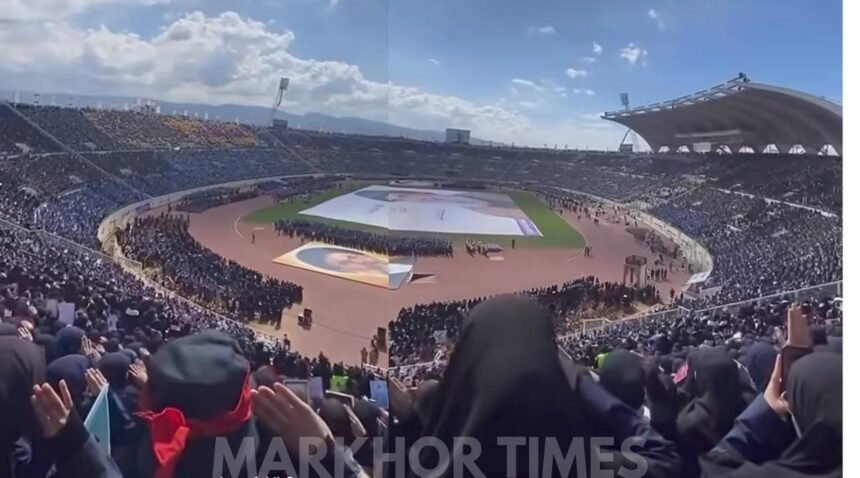
Large funeral gatherings were reported across Iran and several other countries following the reported death of Iranian Supreme Leader Ayatollah Ali Khamenei after missile strikes attributed to the United States and Israel on March 1, 2026. The events marked a historic and emotional moment for supporters while also reflecting divisions within parts of Iranian society.
The main funeral prayers took place in Tehran, where thousands of mourners gathered at Tehran University and Enghelab (Revolution) Square. Crowds dressed in black filled the streets, carrying flags and portraits while chanting slogans in tribute to the late leader. State media described the ceremonies as one of the largest public gatherings in recent years, highlighting Khamenei’s influence during his decades-long leadership.
Religious leaders led prayers as officials and citizens paid their final respects. The funeral ceremonies were broadcast live across national television channels, with continuous coverage showing emotional scenes from across the capital. Authorities organized tight security arrangements to manage the large crowds attending the events.
Beyond Iran, funeral prayers in absentia were also held in several regions. In Pakistan, gatherings were organized by Jamaat-e-Islami in Malir, Karachi, as well as at Mansoora in Lahore, where participants offered prayers and expressed solidarity. Similar scenes were reported in Kashmir, where thousands gathered at Lal Chowk in Srinagar to mourn and hold special prayers.
Iran has simultaneously begun an official 40-day national mourning period. Government institutions and religious centers are expected to hold memorial programs throughout this time, allowing citizens to participate in remembrance ceremonies across the country.
Despite large official gatherings, reports from some regions suggested tensions during funeral processions. In Ilam province, witnesses reported protests and anti-government slogans being raised by small groups, indicating differing reactions among segments of the population. These incidents highlight the complex political atmosphere following the leader’s reported death.
Political analysts say the funeral events serve both as a moment of national mourning and a period of transition for Iran’s leadership. The coming weeks are expected to be critical as authorities manage public sentiment and prepare for future political decisions.
As mourning ceremonies continue inside and outside Iran, global attention remains focused on how the country navigates this sensitive period and what impact it may have on regional stability.