

The future of robotics may depend more on smart hardware than on artificial intelligence alone. Engineers and researchers believe that smooth, human-like movement in robots comes from advanced mechanical design, not just software.
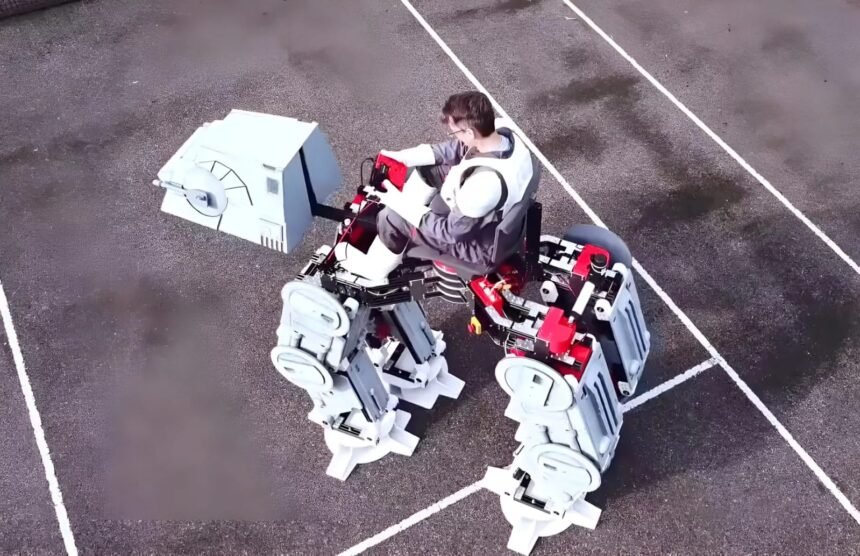
A recent example comes from British engineer and YouTuber James Bruton, who attracted global attention after building a giant, rideable walking robot inspired by the famous AT-AT vehicles from the Star Wars films. His goal was not only to entertain viewers but also to prove that walking robots can move in a stable and controlled way.
Bruton wanted to avoid building a machine that looked impressive but moved awkwardly. “I didn’t want something massive and wobbly,” he explained. To solve this problem, he focused on the robot’s legs and how they move.
To achieve smooth motion, Bruton designed a complex system of motors and gears. These systems work like advanced servos, allowing each leg to move with precision. Sensors also provide feedback, helping the robot stay balanced while walking.
Once the project was complete, Bruton tested the robot by riding it slowly on a tennis court. He even dressed as a Stormtrooper, adding a fun and creative touch to the demonstration. While the robot moves slowly, Bruton says stability was more important than speed.
The project has highlighted a growing belief in the robotics world. Experts say that better motors, gears, and mechanical systems are key to creating robots that walk naturally and safely.
Bruton is now working on an even bigger challenge. He plans to build a two-legged walking robot, which will require faster responses and better balance to support his weight.
As robotics continues to evolve, projects like this show that the future may rely more on clever engineering and motion control than on artificial intelligence alone.