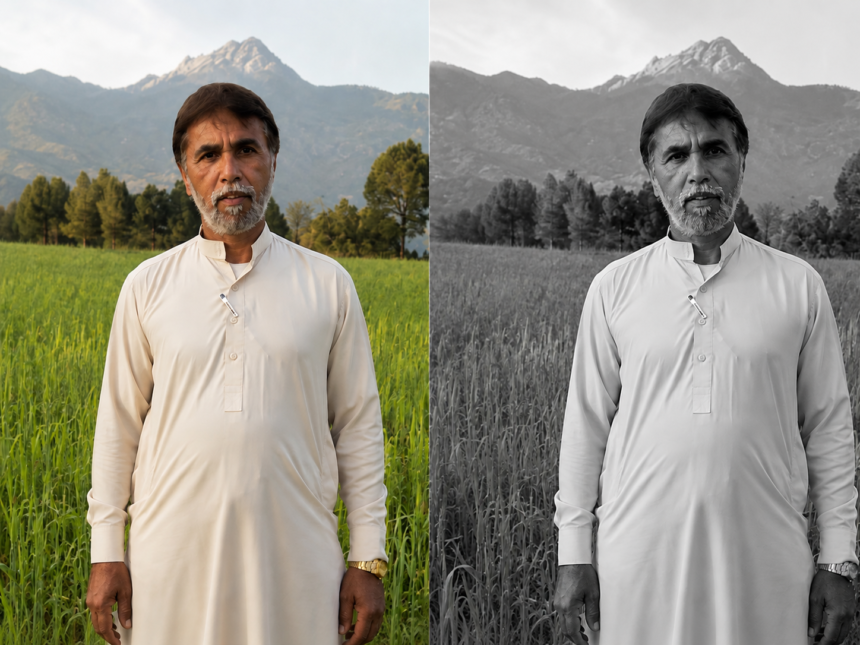
The news [27th Augest,2026] arrived without warning, sharp as a mountain wind that suddenly turns cold. Muhammad Raziq—Tw’an to everyone who knew him—was gone. Heart failure had stilled the man who had been my partner through every season. One moment the world held his steady presence; the next, it held only the hollow space where he had stood.
Heart attack does not simply stop a life. It tears through the quiet fabric of ordinary days and leaves havoc in its wake. It does not announce itself with drama. It arrives like a silent storm that uproots the strongest tree while the surrounding forest still stands, bewildered. In an instant, laughter becomes memory, shared plans become unfinished sentences, and the person who was always available becomes the one you can no longer reach.
Tw’an was the kind of friend who required no invitation. He was present in joy and in difficulty, a comfort that needed no explanation. We walked the long footpaths of Sory, Gerrary, Gowra and Shoprang together—paths that climbed and wound and sometimes disappeared into dust. Those walks were our true conversations. No phones, no hurry, only the sound of boots on stone and the easy exchange of thoughts. The hills still stand. The paths remain. But one set of footprints is missing, and the silence along those trails feels heavier than any climb we ever made.
He was punctual in his Salah the way a man is punctual with the things that define him. Prayer was not an obligation he squeezed into the day; it was the rhythm by which the day was measured. And his thoughts carried a rare innocence—clear, uncluttered, free of the calculation that so often clouds adult minds. In a world that rewards cleverness and caution, Tw’an moved with a simplicity that felt like pure water from a high spring.
The havoc of a heart attack is not only medical. It is relational. It leaves families searching for words that do not exist. It leaves friends walking familiar roads that no longer feel familiar. It forces the living to confront how fragile the strongest bonds can be when the body itself becomes the enemy. In our region, this silent killer claims too many in the prime of life—men and women who still had seasons left to walk, conversations left unfinished, prayers left to offer.
I keep returning to those mountain paths in my mind. I hear our old talks carried on the wind, see him stopping to pray on time even when the trail was steep, feel the easy trust that needed no performance. Friendship like that is not loud. It is the steady companion who walks beside you until the path suddenly ends for one of you.
What remains is the duty of remembrance and the harder duty of care. We cannot bring Tw’an back, but we can refuse to treat the heart as invincible. Regular checks, quieter living, attention to the body that carries the soul—these are small acts of respect for the life that was taken without warning. And we can be, for those still walking with us, the kind of presence Tw’an was: available, steady, a comfort that does not need to be asked for.
The paths of Sory, Gerrary, Gowra and Shoprang will continue to wind through the hills. One day I will walk them again. The footsteps will be fewer, the silence deeper, but the memory of the man who once matched my stride will walk with me—innocent in thought, punctual in prayer, partner of every season until the heart itself said otherwise.