Pakistan’s Doctor Exodus: KP’s Healthcare on Life Support
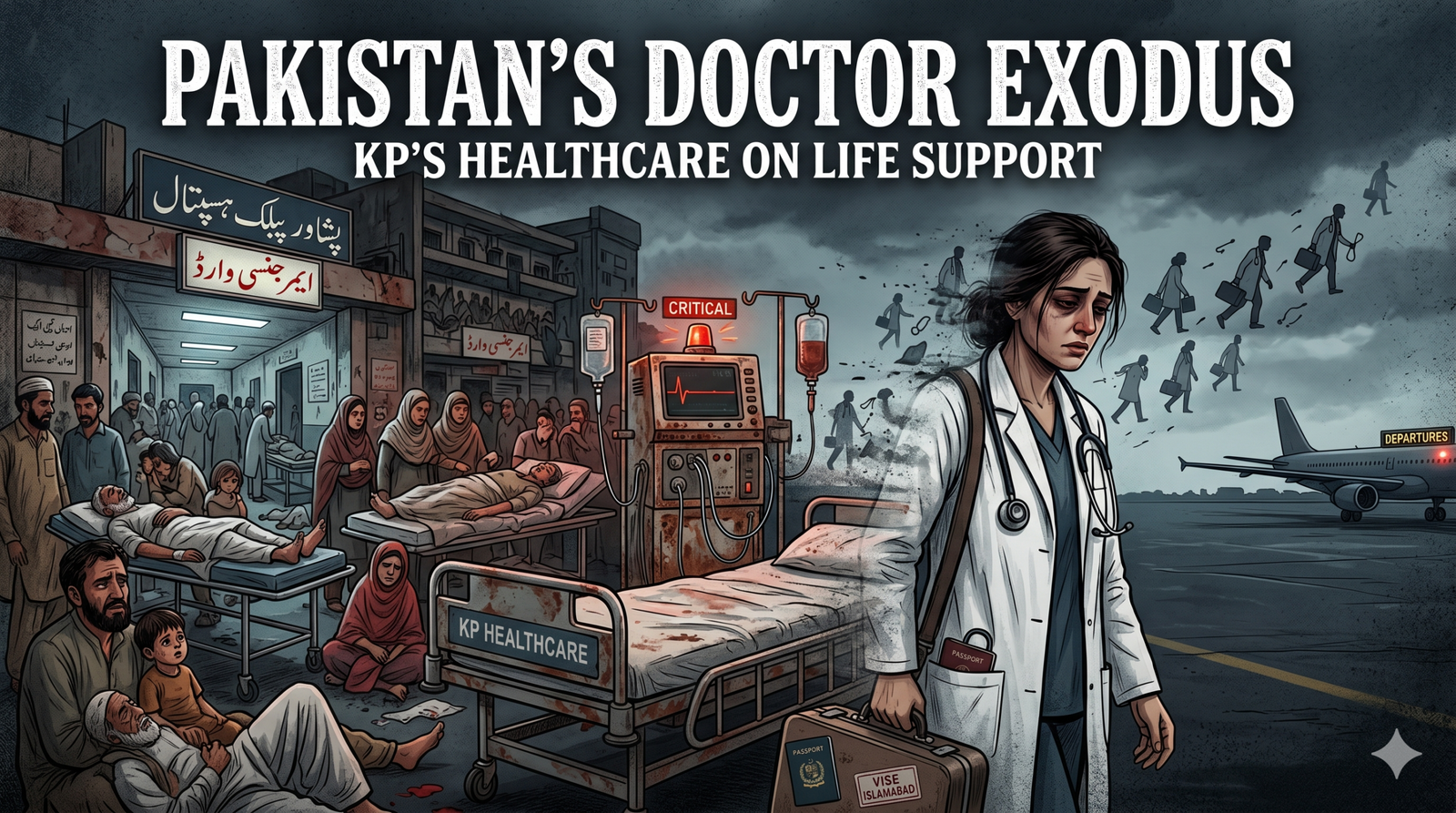
Last month, while visiting a public hospital in Peshawar, I overheard a senior doctor whispering to a colleague about his upcoming visa interview. The wards were overcrowded, with patients spilling into corridors, yet the sense of quiet resignation was palpable. This is not an isolated anecdote; it reflects a deepening crisis in Pakistan’s medical field. Nearly 4,000 doctors emigrated in 2025 alone, the highest annual figure in the country’s history, pushing an already strained system toward collapse.
The central thesis is clear: unchecked medical emigration is not just a workforce issue but a national emergency that undermines Pakistan’s development goals and leaves millions in KP without timely care. Low salaries—often around Rs70,000 for house officers—poor working conditions, security threats, and limited career growth drive this exodus. Surveys indicate that over two-thirds of doctors express a desire to emigrate permanently, with one in three medical students planning to leave.
KP bears a disproportionate burden. With a critically low doctor-to-population ratio—far below WHO recommendations—the province struggles with basic service delivery, especially in rural and merged districts. Tertiary hospitals in Peshawar are overwhelmed as patients bypass dysfunctional Basic Health Units.
Climate change compounds this crisis. A recent vulnerability assessment projects that by mid-century, millions more in KP’s flood-prone areas could face surging vector-borne diseases like malaria, dengue, and leishmaniasis, alongside increases in water-borne illnesses. Post-flood surges in cases have already strained the system.
Despite substantial provincial allocations—such as Rs228.8 billion for health in FY2025-26, including significant funding for the Sehat Card program—implementation gaps persist. Medicines run short, infrastructure crumbles, and specialized care for issues like pediatric burns remains inadequate.
Comparisons with regional peers highlight the urgency. While similar pressures exist elsewhere, Pakistan’s retention policies lag, exacerbating higher maternal and infant mortality in KP’s underserved areas and widening rural-urban divides.
The human cost is immediate: delayed treatments, rising reliance on quackery, and preventable deaths. Economically, the government loses its heavy investment in medical education, as publicly trained doctors serve foreign healthcare systems instead.
Long-term, this erodes progress toward Sustainable Development Goals, weakens pandemic preparedness, and hampers economic productivity. A young, unhealthy population cannot drive the growth Pakistan desperately needs.
A personal observation from interactions with young graduates in KP underscores this. One bright resident, trained in a Peshawar teaching hospital, confided during a late-night shift: “We want to serve here, but how long can we watch patients suffer while fighting for basic supplies?” His story mirrors hundreds, revealing systemic failures that push talent away.
Reversing this tide demands urgent action. Competitive salaries, performance incentives, secure rural postings, and bonded service agreements could help retain talent. Modernizing primary care with telemedicine and AI diagnostics offers promising avenues.
Pakistan and KP must treat healthcare as a strategic investment. A robust retention policy, scaled public-private partnerships, and focus on female health workers in conservative regions are essential. International support tied to reforms can accelerate change.
The window is narrowing. If unaddressed, KP’s healthcare crisis will deepen inequality and forfeit the demographic dividend. By prioritizing doctors through respect, resources, and reform, Pakistan can build resilient systems that heal patients and secure the province’s future. The alternative is a slow bleed that no visa can fix.
One email a week. No noise.
A single story unwound carefully, plus the few things worth your time. Free, and it stays that way.