

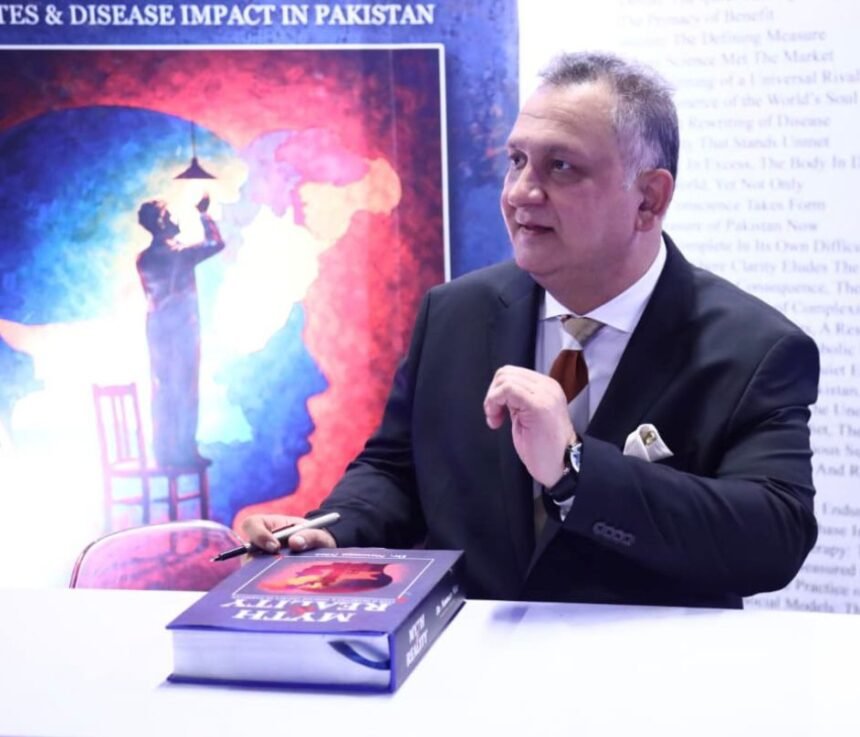
Open any newspaper in Pakistan on any given day and somewhere, buried between the headlines, is the same quiet catastrophe: a nation in the grip of a diabetes epidemic it has not yet fully reckoned with. Tens of millions are diagnosed. Millions more are not — walking through their days unaware, unscreened, and untreated. The disease costs families their savings, costs hospitals their capacity, and costs patients something harder to measure: the years lost to a diagnosis that came too late, delivered without enough explanation and without a clear path forward. Dr. Nauman Niaz wrote his nineteenth book because that cost is too high, and too few people are talking about it plainly.
The first thing a reader notices about this book has nothing to do with words. Every image inside it was painted by hand — thought through, composed, and brought to life through human skill before a single copy went to press. In an age when artificial intelligence can conjure a fully rendered illustration in the time it takes to type a sentence, this book does the opposite. Deliberately, unapologetically, and to striking effect. The paintings are not there to make the pages prettier. They are there because they mean something — and in a medical publishing landscape increasingly shaped by speed and automation, that decision alone makes this volume worth pausing over.
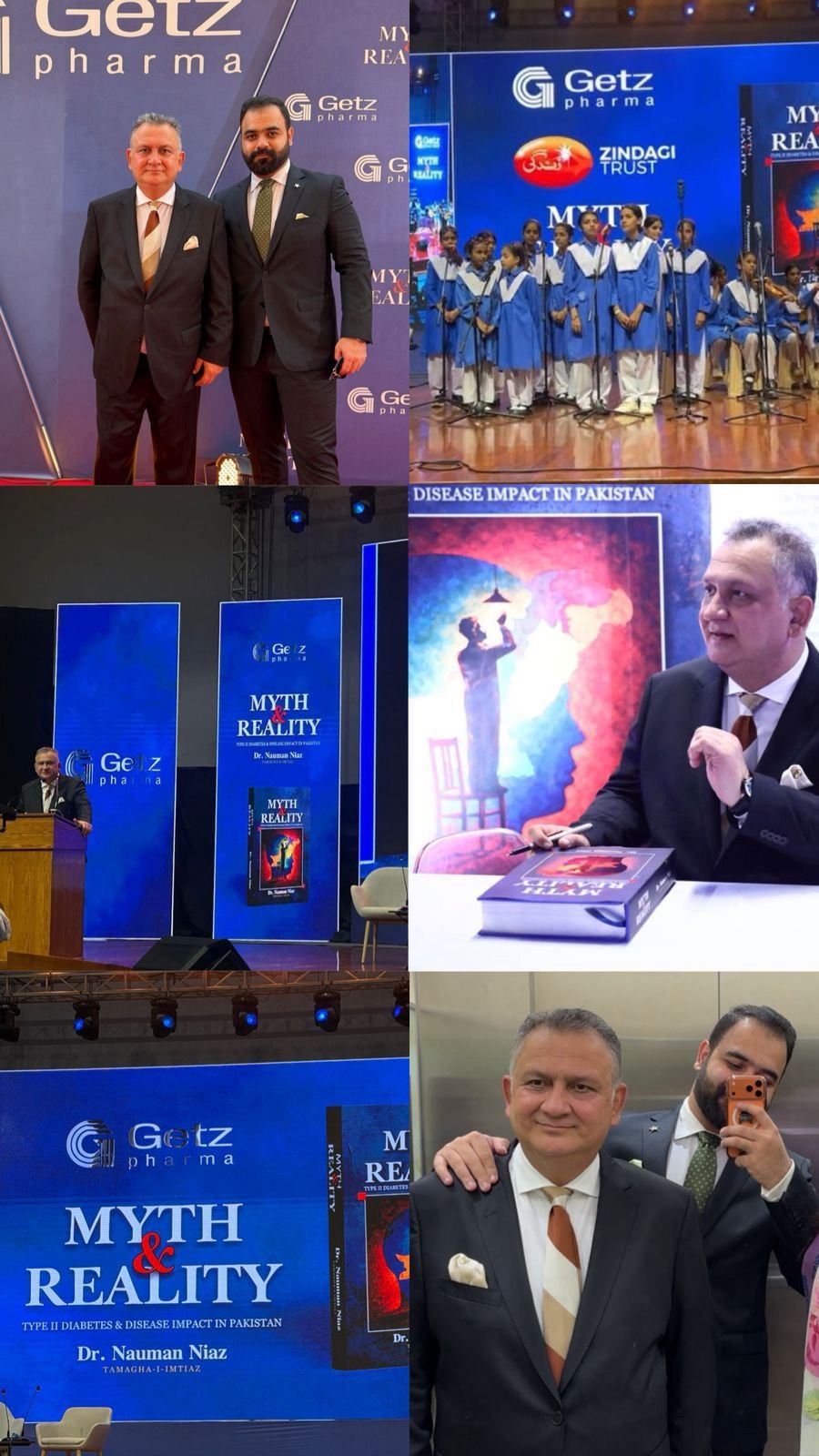
The book was brought into the world by Getz Pharma, with Khalid Mahmood, its Executive Chairman, driving the initiative from a place of genuine social purpose rather than commercial calculation. Mahmood is the kind of entrepreneur who builds schools and playgrounds alongside business empires — a bibliophile and patron whose passions run through poetry, calligraphy, art, and music, and whose support for the Zindagi Trust has helped fund artistic programmes, vocational centres, and a generation of artists who might otherwise have gone unnoticed. Myth & Reality sits naturally within that larger project of giving back.
For Dr. Niaz, the book carries a dual weight. He is known, above all else, through cricket — a field where his writing and expertise have earned him a reputation that spans decades. But endocrinology is where his professional self was formed, and for years a quiet but persistent wish sat alongside his cricket work: to write something for this field that he could be proud of, something that measured up to the seriousness of the subject. That wish is what this book answers.
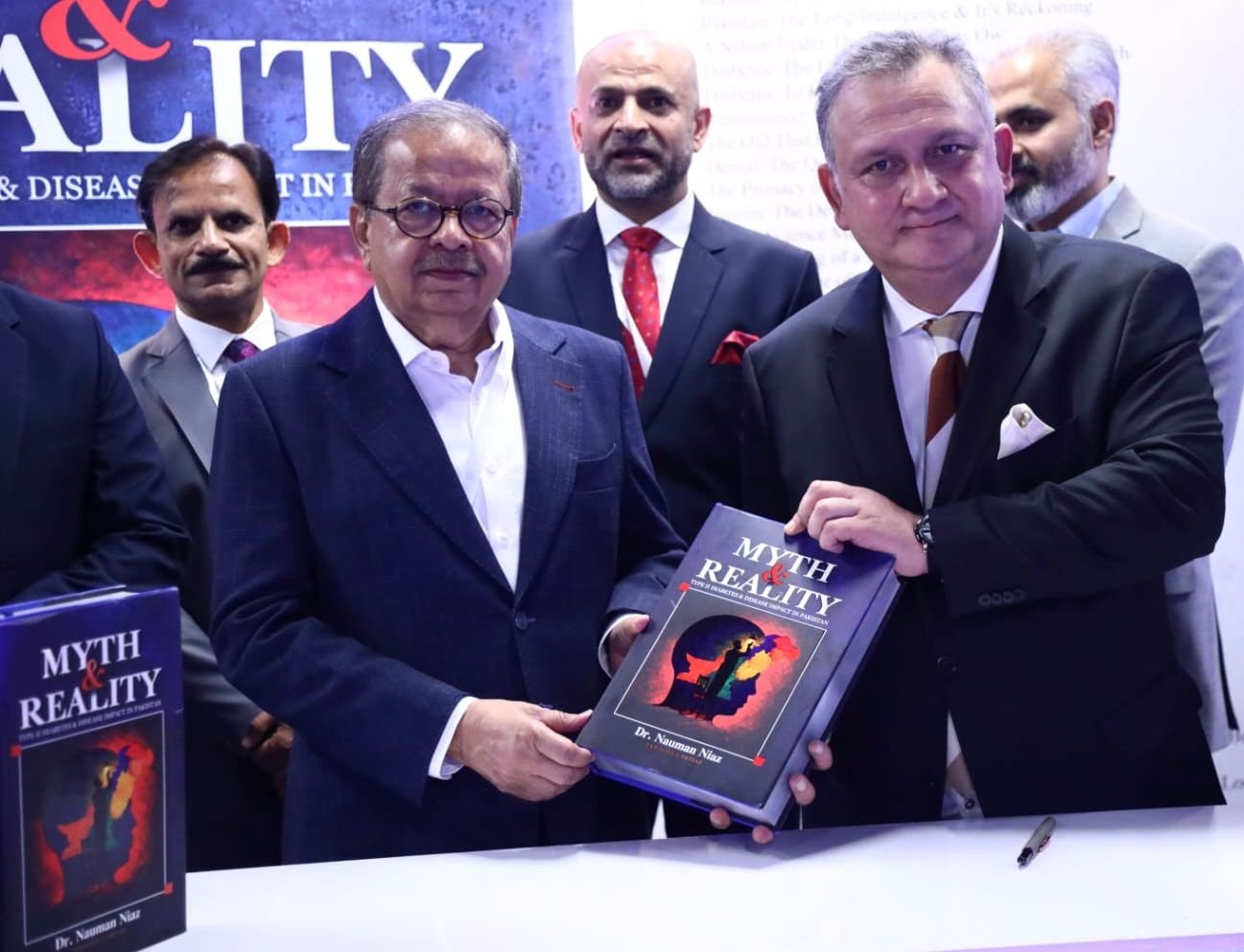
It also answers something more intellectual. Dr. Niaz was formed by the great medical textbooks — Harrison, Cecil, P. J. Kumar — and learned their rhythms well. But he learned something else from them too: that their authority came at a price. They were written for people who already knew the language. He chose to write for everyone else as well — fusing hard clinical data, real-world patient scenarios, and the most current evidence on diabetes and obesity with art, literature, and prose that does not make the reader feel like a trespasser. It is a combination that sounds unlikely on paper and works completely in practice.
The book does not stay within the comfortable boundaries of the discipline. One of its chapters follows elite athletes — world-class competitors managing Type 2 Diabetes at the very top of their sports — and finds in their stories something instructive and quietly extraordinary about what the human body and will can do when a diagnosis is refused the final word. Another chapter goes somewhere most endocrinology texts will not: into the world of homeopathic remedies, herbal treatments, hakim practitioners, and outright quackery — alternatives that millions of Pakistanis turn to every day, sometimes out of desperation, sometimes out of distrust, and almost always instead of the evidence-based care they need. The book looks at this honestly, with understanding rather than judgment, which is precisely why it needed to be written.
Myth & Reality: Type 2 Diabetes is not the kind of book that gets read once and shelved. It is the kind that gets recommended, returned to, underlined, and handed across a desk to someone who needs it. Whether that someone is a doctor seeing their first diabetes patient, a newly diagnosed individual trying to make sense of what comes next, or a curious reader who simply wants to understand one of the most pressing health crises facing Pakistan today — this book was written with all of them in mind. Nineteen books into a remarkable career, Dr. Nauman Niaz has not lost the belief that writing with conviction and care can genuinely shift the way people see the world. Myth & Reality is the proof.