

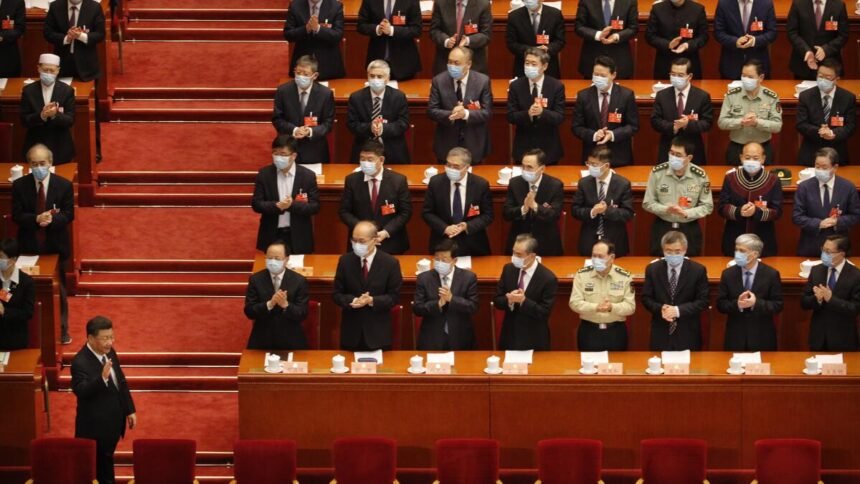
Beijing, March 4, 2026, China has launched its most important annual political gatherings, widely known as the “Two Sessions”, bringing thousands of political leaders, advisors, and officials together in the capital to discuss the country’s future plans and priorities.
Held at Beijing’s Great Hall of the People, the meetings take place every year and usually continue for one to two weeks. The event combines two major political assemblies that help set China’s economic, social, and political direction for the coming years.
Two Major Meetings at the Center of Power
The first gathering is the Chinese People’s Political Consultative Conference (CPPCC), an advisory body made up of more than 2,000 members. Participants come from many backgrounds, including business leaders, scientists, academics, and well-known public figures.
Although the CPPCC does not create laws, its discussions provide insight into policy thinking and national concerns. Members debate economic challenges, social reforms, and development strategies, offering recommendations to the government.
The second and more powerful meeting is the National People’s Congress (NPC), China’s national legislature and highest state authority. Around 3,000 delegates from provinces, government institutions, and the armed forces attend the session each year.
The NPC has the formal authority to approve laws, national budgets, and constitutional changes. However, analysts often describe it as largely approving decisions already shaped by the ruling Communist Party leadership.
Focus on Long-Term National Planning
This year’s Two Sessions are receiving global attention because leaders are expected to outline China’s 15th Five-Year Plan (2026–2030). The plan will guide economic growth, technology development, and national security policies over the next five years.
Observers are closely watching how China plans to strengthen its economy at a time when domestic spending remains weak. Officials are expected to announce economic growth targets and measures designed to boost innovation and industrial development.
Technology and scientific progress are also expected to play a central role, as China continues investing heavily in artificial intelligence, advanced manufacturing, and digital infrastructure to compete globally.
Stability and Military Developments
Another important topic surrounding this year’s meetings is political stability and military reform. Recent dismissals of senior military officials, linked to President Xi Jinping’s ongoing anti-corruption campaign, have drawn attention ahead of the sessions.
Experts believe the leadership may use the meetings to reinforce discipline within state institutions while emphasizing national security and modernization of the armed forces.
How the System Works
The NPC, first established in 1954, meets only once a year. Delegates serve five-year terms and represent regions across the country. While the full congress gathers annually, much of its work is handled by a smaller Standing Committee of around 175 members that meets regularly throughout the year.
This committee plays a key role in reviewing legislation and implementing policies between annual sessions. It is currently led by senior political figure Zhao Leji, a member of China’s top leadership circle.
Global Importance of the Two Sessions
Because China is the world’s second-largest economy, decisions announced during the Two Sessions often influence global markets, trade policies, and international relations. Governments and investors worldwide closely follow the meetings for signals about China’s economic strategy and political priorities.
As discussions continue in Beijing, analysts expect announcements that will reveal how Chinese leaders plan to manage economic challenges while maintaining growth and stability in an increasingly uncertain global environment.