

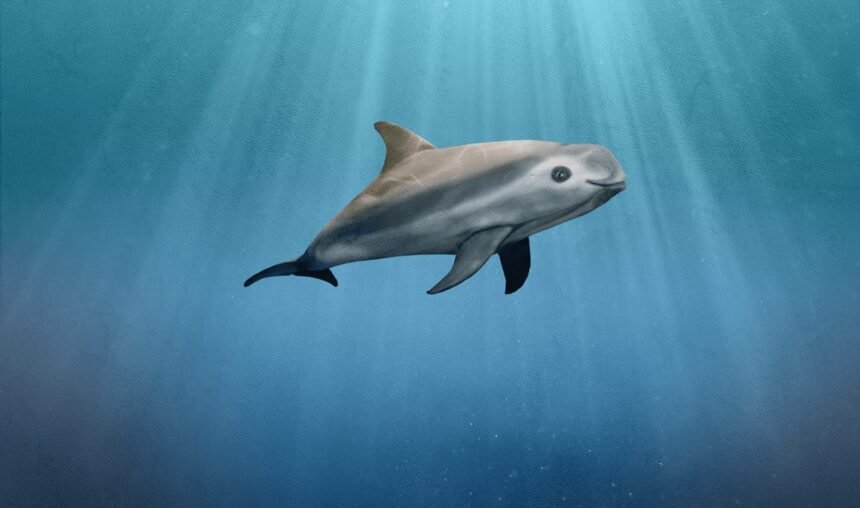
The Vaquita, a small and rare porpoise found only in the Gulf of California in Mexico, is now considered the most endangered marine mammal in the world. Scientists warn that the species is on the edge of extinction, with fewer than ten individuals believed to remain alive.
Recent surveys and scientific studies show how serious the situation has become. Experts estimate that only about seven to ten vaquitas are still living in the wild. A survey conducted in 2024 observed at least six to eight individuals, confirming that the population remains extremely small.
Despite the alarming numbers, scientists have found a small sign of hope. Researchers have recently spotted mother-and-calf pairs swimming together. This discovery shows that the surviving animals are still able to reproduce, which means the species has not completely lost its ability to recover.
The sharp decline of the vaquita population has been happening for many years. Since 1997, the number of vaquitas has dropped by more than 98 percent. Environmental experts say the main reason behind this dramatic loss is illegal fishing.
Vaquitas are often accidentally trapped in large fishing nets called gillnets. These nets are mainly used to catch the Totoaba, a large fish whose swim bladder is extremely valuable on the black market. The swim bladder is sold illegally in some countries for high prices, which encourages illegal fishing in the region.
When vaquitas become caught in these gillnets, they cannot reach the surface to breathe and eventually drown. This accidental trapping has become the biggest threat to the survival of the species.
Scientists and conservation groups have been working for years to save the vaquita. However, efforts such as captive breeding programs have faced many challenges. The species is very sensitive to stress, making it extremely difficult to keep in captivity.
Today, conservationists say the future of the vaquita depends on stronger protection of its natural habitat and strict enforcement against illegal fishing. Without urgent action, experts warn that the world may soon lose one of its rarest marine animals forever.