

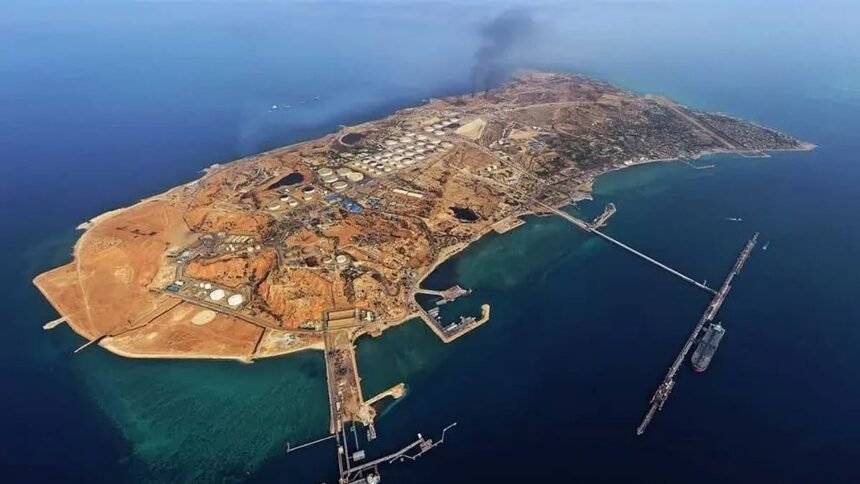
US President Donald Trump has once again sparked global attention after warning of possible American action against Kharg Island a small but highly strategic island that serves as a major oil export hub for Iran. His remarks have raised concerns about rising tensions in the region and the potential impact on global oil markets.
In a recent interview with the Financial Times, Donald Trump openly discussed the possibility of seizing Kharg Island. He stated that the United States has “many options” and could consider taking control of the island, which is widely seen as the backbone of Iran’s oil economy. However, he also noted that such a move would require a long-term presence of US forces in the area.
Kharg Island plays a crucial role in Iran’s oil exports, handling a large portion of the country’s crude shipments. Experts believe that any attempt to capture or control the island could significantly disrupt Iran’s economy and affect global oil supply. This is why the island is often described as Iran’s economic lifeline.
Trump’s comments come after his earlier statement on March 13, where he claimed that US forces had “totally obliterated” military targets on the island. At that time, he also mentioned that the US deliberately avoided striking key oil infrastructure. This suggests a strategic approach, focusing on military pressure while leaving economic assets untouched at least for now.
There has been ongoing speculation among analysts about whether the US might attempt to take control of Kharg Island in the future. Such a move could not only weaken Iran’s oil exports but also provide a strategic base for further operations near the Iranian mainland.
Despite his strong statements, Trump did not confirm any final decision. Instead, he emphasized flexibility, saying that the US could act if needed but is still considering its options.
As tensions continue to rise, the situation around Kharg Island remains critical. Any military or political move in this region could have serious consequences for global energy markets and regional stability.