

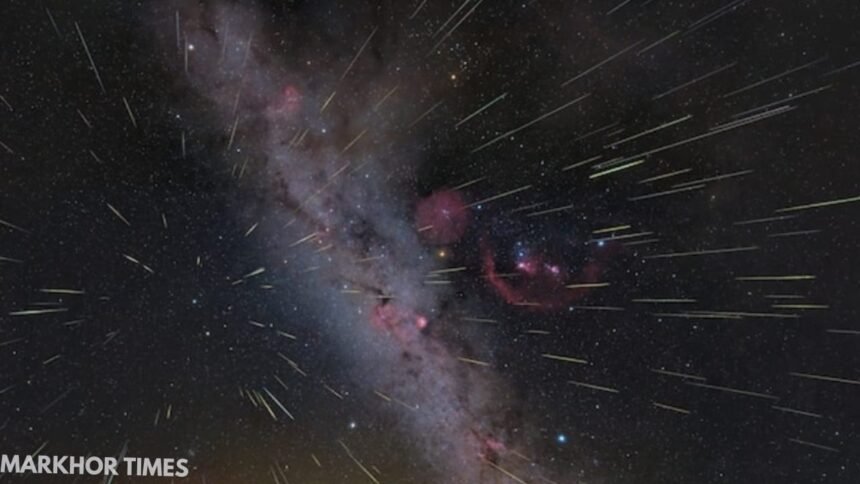
Sky watchers are in for a stunning treat as the Geminids meteor shower reaches its peak in mid-December. Known as one of the brightest and most colorful meteor showers of the year, the Geminids will be most visible on the night of December 13 and the early hours of December 14. Under clear and dark skies, viewers may see up to 120 meteors in one hour.
What makes the Geminids special is their brightness and variety of colors. While light pollution and weather can reduce visibility, many meteors are still bright enough to be seen even from cities. This makes the Geminids a favorite for both experienced stargazers and beginners.
Unlike most meteor showers, the Geminids do not come from a comet. Instead, they are formed from debris left behind by a strange object called 3200 Phaethon. This is an asteroid that behaves like a comet. As it travels around the Sun, it releases dust and rocky material, creating a trail that Earth passes through every December.
The debris from Phaethon is different from typical comet dust. It is heavier, stronger, and more rocky. Because of this, the particles survive longer as they enter Earth’s atmosphere. This causes the meteors to burn brighter and last a little longer in the sky.
Experts explain that the Geminids also appear more colorful because the debris contains metal. As these metal rich particles heat up while entering the atmosphere, they glow in different shades. Iron and sodium create yellow streaks, calcium and silicon give off orange light, magnesium produces blue, and nickel can appear green.
For the best view, experts suggest finding a dark place away from city lights and allowing your eyes time to adjust. No telescope or equipment is needed. Just look up, relax, and enjoy one of nature’s most beautiful sky shows.