

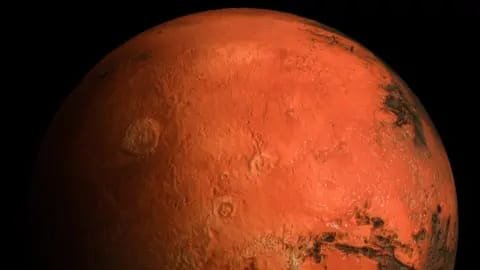
Scientists have made an exciting discovery on Mars. For the first time, they believe they have detected electrical activity in the planet’s atmosphere. This new finding suggests that Mars may be capable of producing lightning like discharges.
NASA’s Perseverance rover, which landed on Mars in 2021, has been exploring the Jezero Crater for signs of ancient life. During its four year mission, the rover recorded unusual electrical sounds using its SuperCam instrument.
Researchers from France studied 28 hours of audio recordings collected over two Martian years equal to 1,374 Earth days. They found that these tiny electrical discharges, also called “mini lightning,” often happened during dust devils or dust storm fronts. Dust devils are small whirlwinds formed when warm air rises from the surface. The swirling air inside them can create electrical charges.
Lead researcher Dr. Baptiste Chide said the discovery is very important. He explained that these electrical discharges could affect Mars’ chemistry, climate, and even future human missions.
The findings have inspired scientists to consider sending better tools to Mars, such as more sensitive cameras and instruments designed specifically to measure atmospheric electricity.
This discovery comes just months after scientists spotted strange rock patterns on Mars. The rocks, nicknamed “leopard spots” and “poppy seeds,” contain minerals linked to chemical reactions that might have involved ancient microbes. Although these minerals could also form naturally, NASA believes they may be among the strongest signs of past life ever found.
While Mars today is a cold, dry desert, evidence shows that billions of years ago it had a thicker atmosphere and flowing water. That is why the Perseverance rover was sent to Jezero Crater a site that once may have been a river delta capable of supporting life.
With each new discovery, scientists get one step closer to understanding Mars’ mysterious past.