

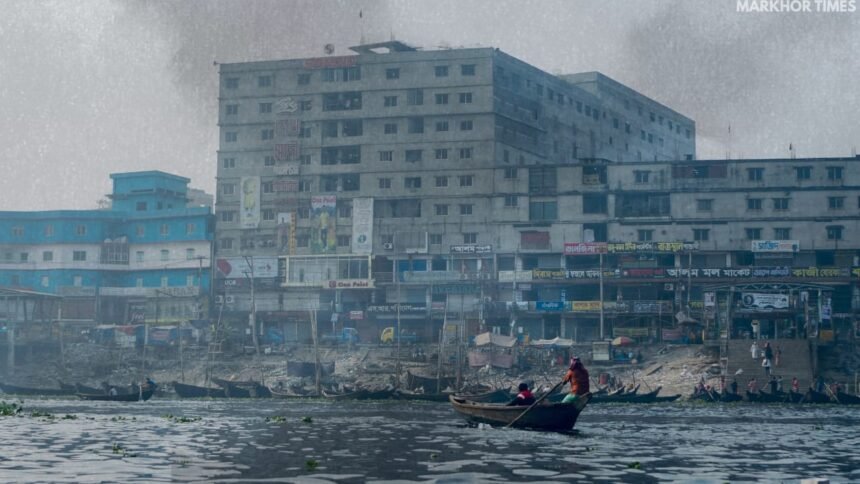
Dhaka, the crowded capital of Bangladesh, ranked as the second most polluted city in the world on Monday morning. At 9:17 am, the city recorded an Air Quality Index (AQI) of 254, placing it in the “very unhealthy” category.
According to air quality reports, this level of pollution poses a serious risk to public health. People living in the city were advised to limit outdoor activities, especially children, the elderly, and those with breathing or heart problems.
On the global pollution list, Lahore in Pakistan topped the rankings with an AQI of 282. Delhi in India ranked third with 225, while Ulaanbaatar in Mongolia stood fourth with an AQI of 200.
The AQI system is used to measure how clean or polluted the air is. An AQI reading between 50 and 100 is considered moderate and generally safe. Levels from 101 to 150 are unhealthy for sensitive groups. Readings between 151 and 200 are unhealthy, while 201 to 300 are very unhealthy. Any level above 301 is labeled hazardous and can cause severe health problems.
In Bangladesh, the AQI is calculated using five major air pollutants. These include fine and coarse particulate matter (PM2.5 and PM10), nitrogen dioxide, carbon monoxide, sulfur dioxide, and ozone.
Dhaka has struggled with air pollution for many years. The situation usually becomes worse during the winter months due to low winds and increased emissions. Air quality often improves during the monsoon season when rain helps clear pollutants from the air.
The World Health Organization estimates that air pollution causes around seven million deaths each year worldwide. These deaths are linked to serious illnesses such as heart disease, stroke, lung cancer, and respiratory infections, highlighting the urgent need for cleaner air.