

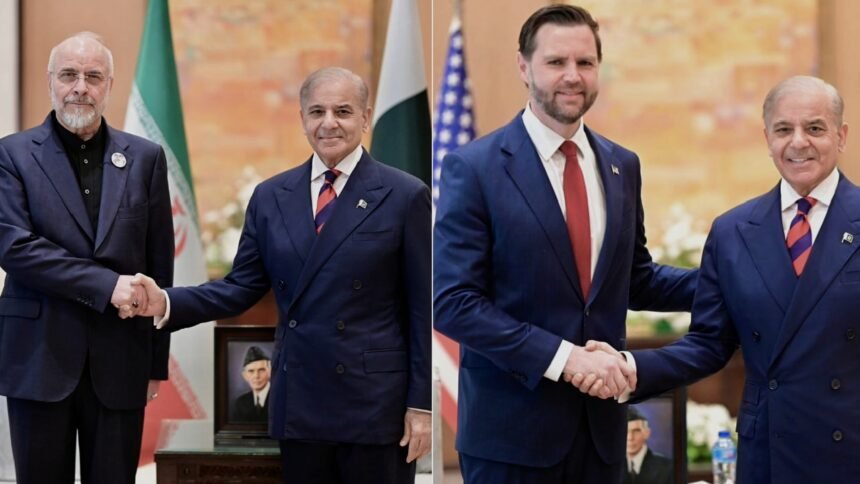
US–Iran peace talks in Islamabad have ended without a final agreement, but they still marked an important moment in global diplomacy. The 21-hour meeting brought top leaders from both countries face to face, something that has rarely happened since the 1979 Iranian Revolution. Even without a deal, the talks showed that both sides are willing to sit together and discuss serious issues.
The talks were hosted by Shehbaz Sharif and supported by Pakistan’s military leadership at the Serena Hotel in Islamabad. The United States team was led by Vice President JD Vance, along with key officials. Iran was represented by senior leaders including Mohammad Bagher Ghalibaf and Abbas Araghchi.
After long discussions, both sides could not agree on key points. The main issues were Iran’s nuclear program and control of the Strait of Hormuz, which is very important for global oil supply. The US wanted strong assurances that Iran would not develop nuclear weapons, while Iran asked for relief from sanctions and a ceasefire in Lebanon before making any big commitments.
US President Donald Trump said that many points were discussed, but no final decision was reached. He also warned that strict actions, including a possible blockade of the Strait of Hormuz, could be taken if tensions rise again.
Even though the talks ended without success, a temporary ceasefire between the two sides is still in place until April 22, 2026. Experts believe that more talks may happen soon, as both countries try to avoid further conflict.