

Through the glass doors of a university hall in Lahore, the rhythmic clatter of a wooden loom echoes against modern architecture. Inside, a solitary artisan works at his craft, his hands moving with practiced precision across the loom’s wooden shaft – a scene that stands in stark contrast to Pakistan’s industrial textile sector, which accounts for 60% of the country’s exports and employs 40% of its industrial labor force.
This weaver, working within the confines of an academic institution, represents one of the diminishing threads in Pakistan’s rich textile heritage. According to a 2023 survey by the Pakistan Handicrafts Association, the number of traditional weavers in Punjab has declined by 67% over the past two decades, with fewer than 2,000 full-time practitioners remaining.
Like many traditional crafts in the region – from ralli quilting in Sindh to handloom weaving in Punjab – these ancestral skills face mounting pressures from industrialization and changing consumer preferences. The mechanization of textile production, which can produce fabric at nearly 40 times the speed of traditional methods, has pushed many artisans to abandon their craft. A handloom weaver typically produces 2-3 meters of fabric per day, while modern power looms can generate up to 80 meters in the same timeframe.
Read More: EXCLUSIVE | Conversation with the Common Pakistani
“These traditional crafts are more than just means of producing textiles,” says a textile arts researcher. “They represent centuries of cultural knowledge passed down through generations. A single traditional weaving pattern can contain over 300 distinct motifs, each with its own cultural significance.”
The economic realities are stark. While Pakistan’s textile industry generated $19.3 billion in exports in 2023, traditional weavers often earn less than $100 per month. In comparison, even entry-level factory workers in the industrial textile sector earn approximately $70-85 monthly. The disparity has led to a dramatic decline in the number of young people pursuing traditional crafts – a 2022 study by the Pakistan Institute of Traditional Arts found that only 8% of artisans are under the age of 30.
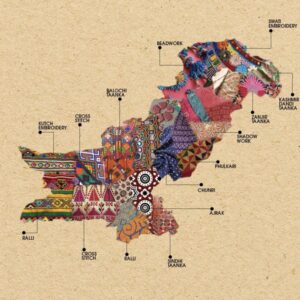
Despite these challenges, some initiatives offer hope. The Indus Heritage Trust has documented over 400 traditional weaving patterns and techniques since 2018, creating a digital archive for future generations. Meanwhile, select boutique fashion houses in urban centers have begun incorporating traditional weaving techniques into contemporary designs, offering prices up to five times higher than standard market rates for handwoven textiles.