

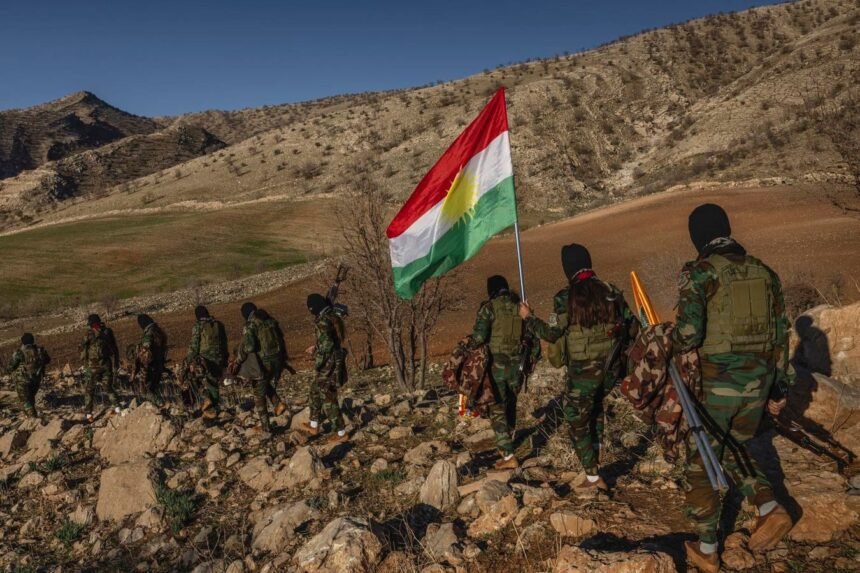
Iran’s military says it has carried out missile strikes against the headquarters of Kurdish opposition groups located in northern Iraq. The attack is part of a growing campaign by Tehran against Iranian Kurdish factions operating across the border.
According to Iranian officials, three missiles were fired at what they described as bases of “Kurdish groups opposed to the Islamic Revolution” in Iraqi Kurdistan. The strikes highlight rising tensions in the region as the conflict between Iran and its opponents continues to intensify.
Iran has recently increased military pressure on Kurdish areas in both Iran and neighboring Iraq. These actions are connected to wider regional tensions, including ongoing attacks involving the United States and Israel.
Kurdish fighters based in Iraq might cross into Iran to take part in operations against the Iranian government. However, Kurdish opposition leaders strongly denied these claims.
Hanna Hussein Yazdan Pana, a representative of the Kurdistan Freedom Party (PAK), rejected the reports and said no Kurdish fighters had entered Iran.
“This is not true. People should not believe these rumors,” she said. “Not a single Peshmerga fighter has moved into Iran. No one acts alone.”
Pana explained that six Kurdish opposition groups recently formed a coalition and are discussing possible plans for the future. However, she said any move against Iran would require strong international support.
She stressed that Kurdish fighters cannot move forward without protection in the air. According to her, the first step would be destroying Iranian military depots and weakening the country’s air defenses.
“We cannot move if the skies above us are not safe,” she said. “Otherwise it would be suicidal.”
Pana also called for the creation of a no-fly zone over the region to protect Kurdish fighters from Iranian air strikes. She added that Kurdish forces have limited weapons and cannot match Iran’s advanced military equipment.
“The regime is very brutal,” she said. “The most advanced weapon we have is a Kalashnikov.”
Meanwhile, speculation has grown that the United States may consider supporting Kurdish forces in the future. Some reports claimed that President Donald Trump was looking at ways to involve them in the conflict on the ground.
However, the White House denied reports that the United States plans to arm Kurdish fighters.